Mấy hôm trước, tôi gặp hai vợ chồng người em mở quán cà phê được hơn 8 tháng. Quán vận hành tạm ổn, doanh số cũng bắt đầu vào guồng nên hai em nói với tôi một câu rất quen: “Giờ tụi em tính mở thêm cửa hàng nữa.” Do mấy tuần rồi tôi di chuyển liên tục nên anh em hẹn mãi mới gặp. Ngồi nói chuyện với nhau chừng hơn tiếng, tôi không phân tích bảng biểu, cũng không khuyên nên hay không nên mở, chỉ hỏi vài câu rất đơn giản: khách hàng của em chính là ai? nếu mở thêm lúc này thì hai em đang mạnh nhất ở điểm nào? và cửa hàng hiện tại còn dư địa gì chưa làm tới?
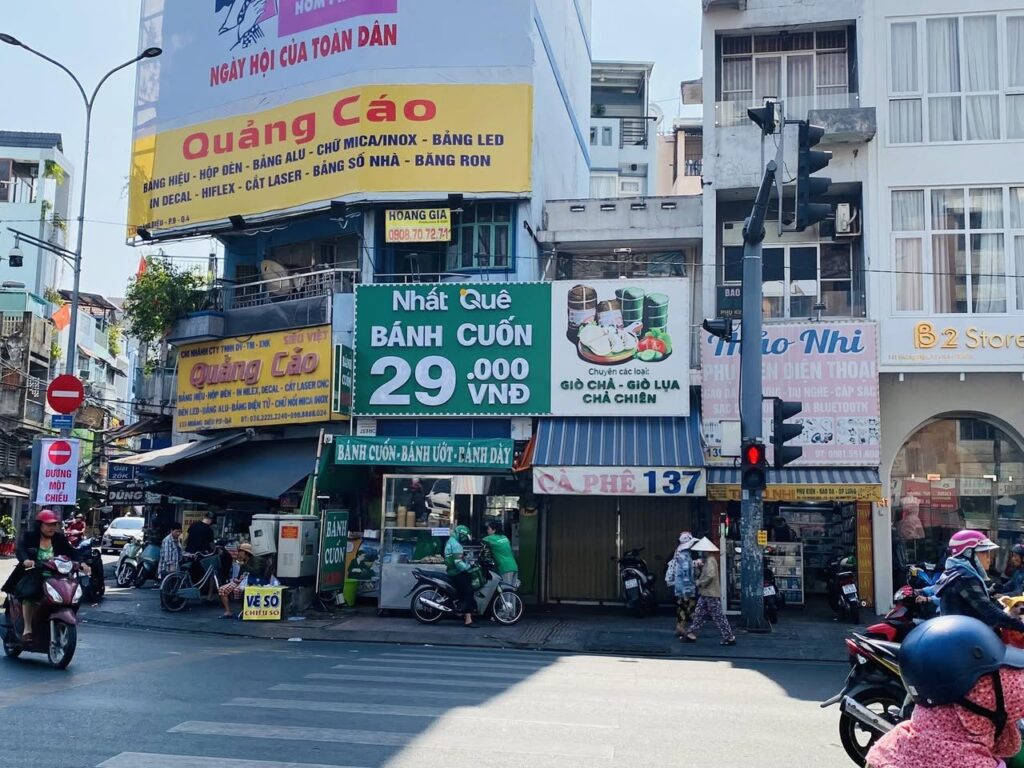
Kết thúc buổi gặp hai em tự im lặng vài phút rồi cười và nói: “Thôi chắc tụi em chưa mở vội, tập trung đẩy cửa hàng này cho mạnh hẳn đã.” Khoảnh khắc đó làm tôi thấy rất quen, quen như câu chuyện gần một năm trước khi tôi bắt đầu đồng hành cùng vợ chồng anh chị bên Nhất Quê.
Ngày đầu gặp, anh chị đã có hai cửa hàng. Là người làm nghề giò chả truyền thống nên suy nghĩ rất thật và rất nghề: muốn bán được nhiều giò chả hơn thì mở thêm quán bánh cuốn để kéo tiêu thụ. Mọi thứ được làm bằng kinh nghiệm, bằng sự chăm chỉ và bằng niềm tin của người trong nghề. Nhưng khi team vào đồng hành sâu hơn, bóc từng con số ra mới thấy hệ thống đang khá phân mảnh, doanh thu có nhưng chi phí không rõ. Nếu tính đúng và đủ cả công sức của hai anh chị bỏ ra thì gần như chỉ huề vốn. Tôi đã nói một quyết định lúc đó không dễ nghe: đóng hai cửa hàng cũ và làm lại từ đầu một cửa hàng mới tại 135 Hoàng Diệu.
Gần một năm qua, cả team cùng anh chị chọn lại điểm bán cho kỹ hơn, đo lại dòng khách, làm rõ số liệu, tối ưu menu, tối ưu vận hành và chỉnh từng chi phí nhỏ. Kết quả đến hôm nay là doanh thu đã x2, lợi nhuận tăng lên nhiều lần nhưng điều làm tôi vui nhất không phải con số, mà là thấy rõ anh chị đã “lên trình”, biết nhìn số, biết đọc hiệu quả và con đường phía trước trở nên rõ ràng hơn rất nhiều.
Với tôi, đồng hành chưa bao giờ là làm thay, mà chỉ là cùng học, cùng làm, cùng sửa và cùng phát triển, mỗi người làm đúng năng lực và sở trường của mình. Càng đi lâu trong hành trình mở cửa hàng, tôi càng tin rằng giai đoạn này và cả giai đoạn sau nữa, người đi xa không phải là người mở nhiều nhất, mà là người mở chắc nhất. Hiệu quả quan trọng hơn số lượng, đi chậm nhưng vững còn hơn mở nhanh rồi phải quay lại sửa từ đầu.
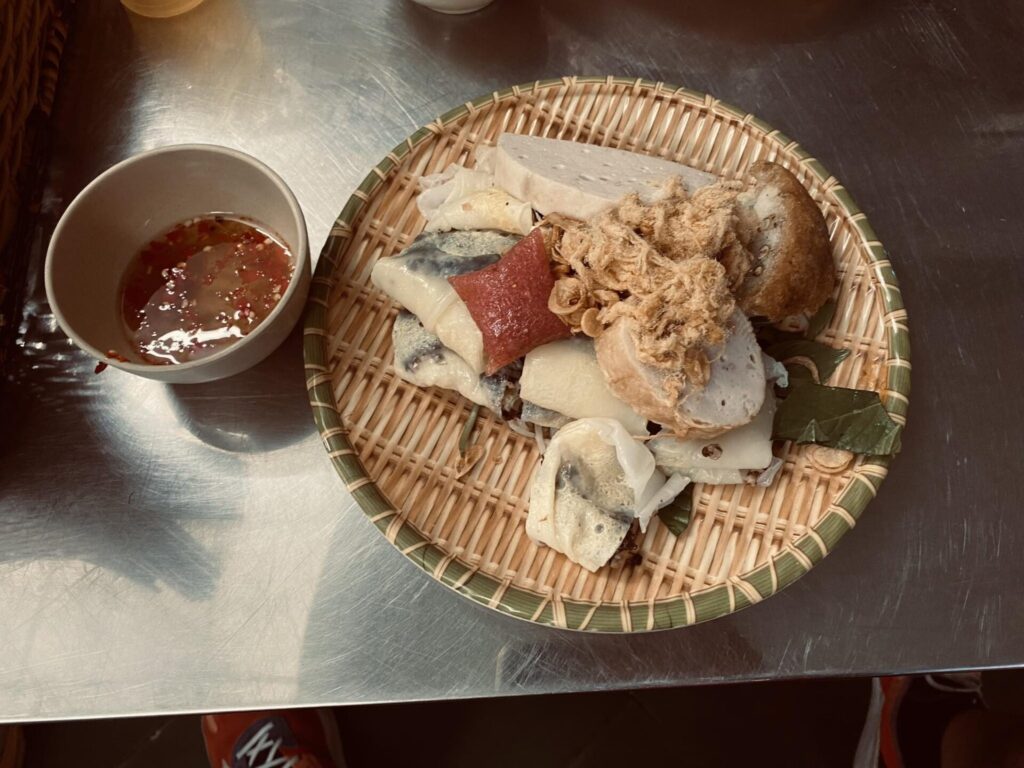
Nghe câu này từ một clip của một anh “thầy”…mình đang ngồi ăn bánh cuốn mà tự nhiên thấy nghẹn, không phải vì sai mà vì nó đúng… nhưng đúng ở một thế giới khác. Thế giới của những chuỗi lớn, nơi có phòng HR tuyển người, có quy trình dựng sẵn, có data để tính từng khung giờ. Còn ngoài kia, những chủ quán nhỏ như anh em mình thì thiếu người là tự chạy ra bán, nhân viên nghỉ là tự đứng bếp, có khi mang cả con ra quán ăn ngủ luôn ở đó. Tuyển một người có khi mất cả tháng chưa chắc có, giữ được người còn khó hơn, nên nói thật nghe mấy câu kiểu “tối ưu nhân sự” có mà tối bằng mắt.
Mình không phủ nhận kiến thức, nhưng nhiều khi thấy buồn cười là những người đó đã từng mở quán, đứng bán một ngày cho ra hồn lại nói chuyện như thể đang dạy người khác cách vận hành. Anh đã từng trải qua cảm giác khách đứng kín quán, bếp làm không kịp, Grab đứng ngoài chửi vì trễ đơn, nhân viên nghỉ ngang không báo, chủ quán phải lao ra làm hết chưa? Hay là cái cảm giác tối hôm qua thôi, một chị mình đang hỗ trợ gọi điện, giọng gần như sắp khóc vì công an với đô thị xuống dẹp, đông quá, hoảng quá không biết xử lý sao. Những thứ đó không có trong slide, không có trong giáo trình, nhưng lại là thứ anh em mình phải đối diện mỗi ngày.
Ngay cả team mình đang làm, gọi là “đội phản ứng nhanh”, nghe thì có vẻ bài bản nhưng thực chất là có chuyện gì gấp là lao ra xử lý, từ chuyện bị dẹp xe, CA, hàng xóm… Đó mới là đời thật của F&B. Nên nhiều khi nói “tối ưu nhân sự” trong giai đoạn đó không khác gì bảo một người đang đuối nước hãy bơi đẹp hơn. Không phải anh em mình không muốn chuẩn, mà là chưa đủ lực để chuẩn, không phải không muốn tối ưu, mà là còn chưa đủ người để mà tối ưu.
Tuần trước mình đi học có gặp một người em, bạn nói trước em học một bên xong về bê nguyên bộ quy trình của tập đoàn áp vào quán nhỏ, kết quả là nhân sự không đủ, vận hành rối, bản thân thì kiệt sức và Tết rồi bạn còn phải bế cả con nhỏ lên cửa hàng để bán hàng. Lúc đó mới thấy rõ một điều là không phải cái gì đúng cũng đúng với mình ở thời điểm này. Với chủ quán F&B, đặc biệt là giai đoạn đầu, thứ quan trọng nhất không phải là tối ưu mà là sống sót. Hôm nay bán được chưa, ngày mai còn đủ người đứng quán không, tuần sau còn trụ nổi không. Làm được rồi hãy làm tốt, sống được rồi hãy tối ưu.
Nên nếu anh em đang trong giai đoạn khó, đừng áp lực vì mấy cái gọi là “chuẩn chỉnh”. Học thì vẫn nên học, nhưng phải biết chắt lọc và nhìn vào nguồn lực của mình để áp dụng. Chứ không phải nghe thầy nói gì cũng làm theo, áp một cách mù quáng rồi cuối cùng cái mất không phải là chưa tối ưu mà là đóng cửa. Kinh doanh F&B nó không nằm trên slide, nó nằm ở những ngày mệt đến mức ăn không kịp nuốt, ở những lúc chạy không kịp thở, và ở những tình huống mà chỉ có người trong cuộc mới hiểu. Anh em mình đi qua được giai đoạn đó đã là một dạng “tối ưu” rồi, không phải tối ưu chi phí mà là tối ưu khả năng chịu đựng.Chúc bạn luôn bền chí trên hành trình kinh doanh.
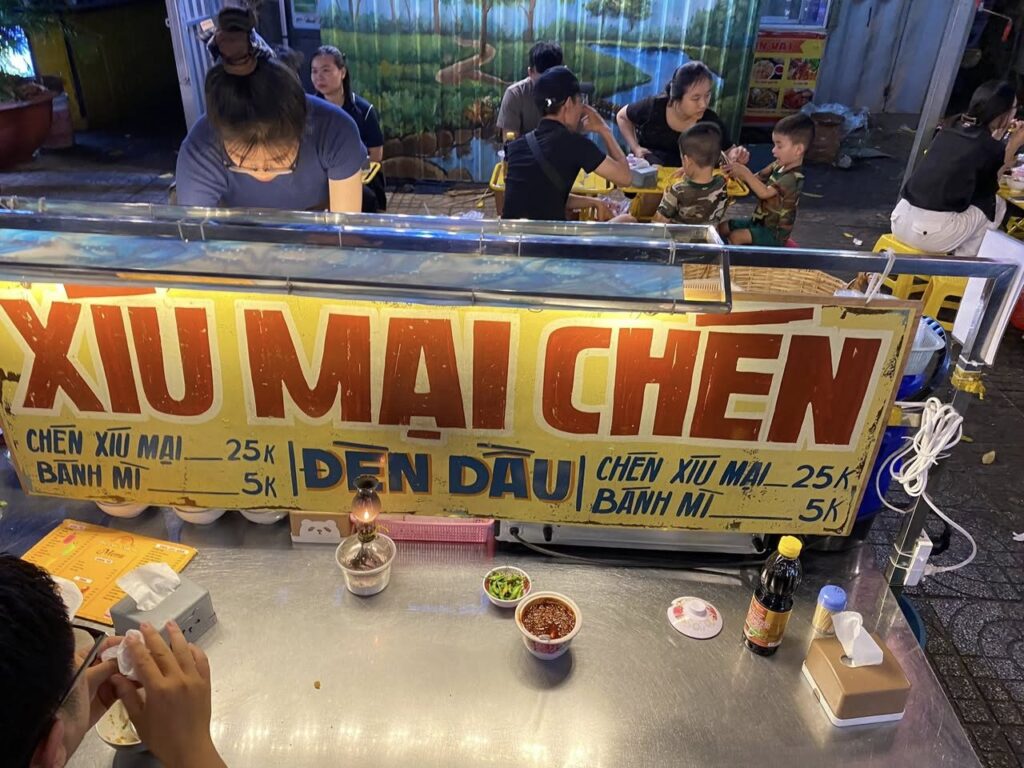
Hôm qua đi thị trường ngang đường Nguyễn Thị Thập thì ghé vào một quán nhỏ bán xíu mại chén. Ban đầu cũng chỉ nghĩ đơn giản là ghé ăn thử thôi, nhưng càng ngồi quan sát thì lại càng thấy thú vị. Và nhiều khi chính những buổi đi thực địa như vậy mới giúp mình hiểu được vì sao có những quán rất nhỏ nhưng lại bán rất tốt.
Quán này menu cực kỳ đơn giản. Gần như chỉ bán đúng một món là xíu mại chén 25k và bánh mì 5k. Hết. Nhưng phía menu nước thì lại khá nhiều, từ đậu nành tới các loại nước mát, giá khoảng 20–35k. Ngồi nhìn một lúc là hiểu ngay logic vận hành của quán này: giữ món ăn thật đơn giản để bếp chạy nhanh, còn phần kéo lợi nhuận nằm ở đồ uống.
Thật ra đây là một logic rất phổ biến trong ngành F&B hiện nay. Theo số liệu từ iPOS và nhiều chuỗi F&B mình từng làm việc cùng, biên lợi nhuận gộp của món ăn thường chỉ dao động khoảng 55–65%, nhưng đồ uống có thể lên tới 70–85%, đặc biệt là những mô hình nước tự nấu như đậu nành, trà hay nước mát. Nghĩa là nếu một khách gọi thêm một ly nước 25k thì nhiều khi lợi nhuận còn tốt hơn cả một phần ăn.
Chưa kể khi menu càng ít thì:
– tốc độ ra món nhanh hơn,
– tồn kho ít hơn,
– nhân sự bếp gọn hơn,
– tỷ lệ sai món cũng thấp hơn.
Ví dụ một quán bán 30–40 món sẽ cần lượng nguyên liệu rất lớn, tủ lạnh lớn hơn, bếp phức tạp hơn và tỷ lệ thất thoát cũng cao hơn. Còn những mô hình kiểu “1 món signature” như vậy thì gần như mọi thứ đều được tối ưu để xoay vòng thật nhanh.
Cái mình thích nhất là cảm giác “dễ ghé”. Không gian nhỏ, bàn thấp thấp khoảng 45cm, ghế đẩu ngồi sát nhau tạo cảm giác đông vui. Nhiều quán bây giờ làm rất đẹp nhưng khách bước vô lại hơi ngại. Còn quán kiểu này thì nhìn là muốn ngồi xuống ăn ngay.
Và thật ra để nhìn ra được những thứ đó thì bắt buộc phải đi thực tế.
Trong nghề phát triển mặt bằng tụi mình hay nói vui là có “bài toán đi bộ”. Tức là muốn hiểu thị trường thì phải đi bộ, phải đứng quan sát và cảm nhận nhịp thật của khu vực đó. Nhiều người bây giờ chỉ xem Google Maps, xem review hay xem hình trên mạng rồi nghĩ là đã hiểu thị trường, nhưng thật ra không đâu.
Có những thứ chỉ khi xuống thực địa mới thấy được:
– khách tới là ai,
– khách đi xe máy hay ô tô,
– shipper đứng có đông không,
– khách ngồi bao lâu,
– quán đông thật hay chỉ đông theo giờ,
– người ta mua mang đi hay ngồi lại,
– dòng xe có thuận để ghé vào không.
Ví dụ cùng một con đường nhưng có những bên đường lượng khách vào khác nhau hoàn toàn chỉ vì hướng chạy xe hoặc thói quen dừng đỗ. Những thứ đó ngồi trên máy tính gần như không cảm được.
Và cũng nhờ đi thực địa như vậy mới thấy một điều khá rõ: mô hình F&B vỉa hè ở Việt Nam thực sự rất mạnh.
Theo báo cáo của iPOS năm 2025, hơn 80% cơ sở F&B tại Việt Nam hiện nay vẫn là mô hình nhỏ lẻ và độc lập. Phần lớn trong số đó là quán vỉa hè, kiosk nhỏ hoặc cửa hàng diện tích dưới 50m2. Đây chính là nhóm tạo ra “màu sắc” lớn nhất cho ngành ăn uống Việt Nam.
Thật ra văn hóa vỉa hè ở Việt Nam là một thứ rất đặc biệt. Người Việt mình gần như ai cũng quen với cảnh ngồi ghế nhựa sát lề đường, ăn tô bún, ổ bánh mì hay chén xíu mại rồi nhìn dòng người chạy qua lại. Nó không chỉ là chuyện ăn uống nữa mà nhiều khi đã trở thành một phần văn hóa sống và văn hóa đô thị.
Nhưng thời gian tới chắc chắn câu chuyện quản lý vỉa hè sẽ thay đổi khá nhiều khi các chính sách bắt đầu siết mạnh hơn. Thật lòng mà nói thì trong lòng mình cũng hơi lăn tăn, không biết rồi những mô hình nhỏ như vậy sẽ đi đâu về đâu. Vì phía sau mỗi quán nhỏ thật ra là một câu chuyện mưu sinh, là cả một gia đình và cũng là giấc mơ kinh doanh của rất nhiều người.
Mình hiểu việc quản lý đô thị là cần thiết, nhưng cũng hy vọng sẽ có những hướng xử lý phù hợp hơn để vừa đảm bảo trật tự đô thị, vừa giữ được phần nào cái chất rất riêng của ngành F&B Việt Nam. Vì nhiều khi chính những quán nhỏ ven đường như vậy mới là thứ tạo ra sức sống cho một thành phố.
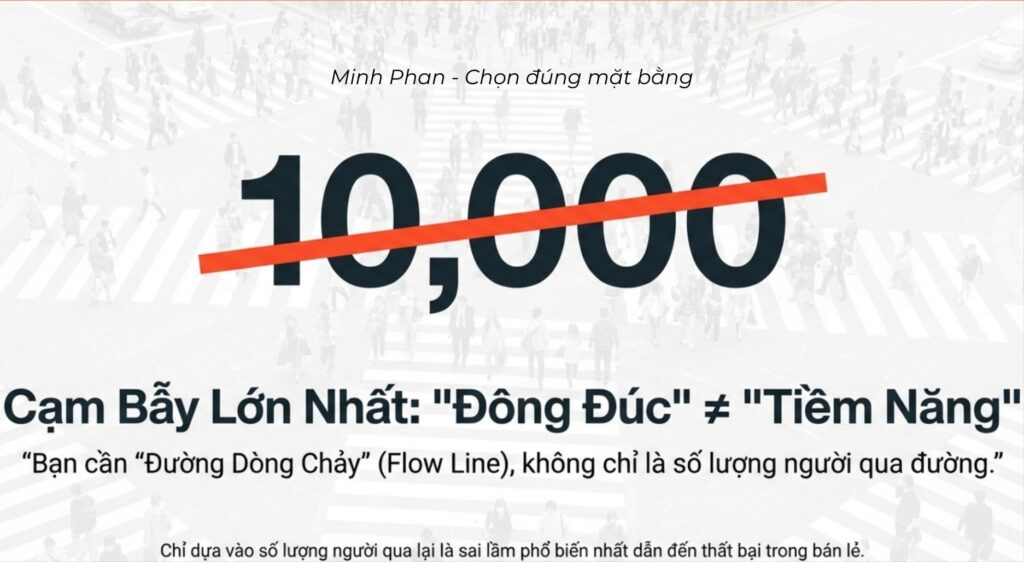
There's a common misconception I've seen many shop owners, even those who have opened several stores, fall into: that if it's on a busy street with lots of traffic and people passing by, then sales are guaranteed.
I used to think the same way. That was until I went with a chain store owner to survey a prime location on a very beautiful street in Ho Chi Minh City. The traffic was incredibly heavy, cars were constantly moving, and it looked "top-notch" to the naked eye. He almost wanted to close the deal immediately because he felt it was a golden location. But when we stayed a little longer and observed more closely, I realized the opposite: the cars were moving fast, the flow was constant, and very few cars slowed down. To turn in, you had to brake suddenly, and the entrance was rather narrow. In other words… you could see it, but it wasn't easy to get there.
Ultimately, we advised them to stop. The owner was very regretful at the time. But a few months later, someone else rented the space and closed it down quite quickly. It wasn't that they did a bad job. It's just that from the beginning they gambled on something that wasn't a real advantage.
I've realized something: high traffic is only a necessary condition. The sufficient condition is whether customers want to and dare to turn in.
Many people opening a shop look at the location as if it were a static picture: a busy area, a large storefront, and an attractive brand name are enough to reassure them. But in reality, a roadside shop is a dynamic setting. Drivers only have a few seconds to observe, understand, and decide. Just a small inconvenience, such as difficulty turning, difficulty stopping, or fear of getting stuck in traffic behind, can instantly ruin that decision.
I've seen quite a few similar cases while working with business owners. Some locations might seem unremarkable at first glance, but because they're easy to access, have convenient parking, and are easy to get out of, customers naturally flock to them. Conversely, there are locations that everyone praises as beautiful, but they quietly lose customers every day, and the owners don't understand why.
That's why I always say: roadside shops don't sell coffee, they don't sell products; they're selling a change of direction that happens in a matter of seconds.
Looking back, I realize that many of the wrong decisions didn't stem from a lack of money or experience, but from a misunderstanding of the true nature of the position.
This article is just the beginning of a series about roadside stores. In the next article, I will delve deeper into something many people overlook but which determines the survival of a store: customers see you… but will they actually visit? This is also the work I do with business owners, analyzing data, customer behavior, and operational realities before making final decisions in the training and support package for opening a store, with a very simple goal: to reduce the risk of making a mistake right from the location selection stage.
In the next post, I'll talk about something very interesting: many stores fail not because customers don't see them… but because customers see them but can't bring themselves to visit.
Many people, when forecasting revenue, often look at something very obvious: foot traffic. A lot of cars and people automatically mean good sales. But after years of surveying and opening locations with clients, I've found there's a variable that, if misunderstood, can skew the entire forecast from the start – and that's competition.
Interestingly, competition isn't just about how many rivals surround you. Competition is essentially about customer choice. Customers might leave your restaurant not because the one next door is better, but because they find another option more convenient, more familiar, or simply... already part of their daily routine.
Many people view competition in a very narrow sense: only those selling in the same industry are considered competitors. But the reality is much broader. A coffee shop in Vietnam today competes not only with other coffee shops, but also with bubble tea shops, convenience stores offering takeaway drinks, and even bakeries with nice seating. Ultimately, customers aren't buying "coffee"; they're buying the experience or fulfilling a need at that moment. Some industries have very clear boundaries, while others have almost completely blurred lines. Misjudging the scope of competition almost certainly leads to inaccurate revenue forecasts.
One thing I've noticed many new business owners misunderstand is that being close to competitors is always bad. In reality, the market operates quite the opposite way. In economics, there's a model that suggests many stores tend to be located close together because sellers want to maximize market share – this phenomenon is called location competition. If you notice in Vietnam, streets with many cafes, restaurants, or densely packed service establishments are usually very busy. The reason is simple: customers prefer places with more choices. Studies on the concentration of many businesses in the same or related industries in an area also show that when businesses are concentrated, a positive ripple effect occurs, boosting the overall performance of the entire area. Simply put: A cafe standing alone → customers must have a reason to visit. A cluster of 10 cafes → the area itself becomes a destination.
In everyday language: sometimes competitors aren't stealing your customers, but rather attracting them to their own area.
This is particularly evident in the Vietnamese market. For example, the coffee industry continues to expand strongly. Several recent reports indicate that the Vietnamese coffee market is still growing steadily, with a CAGR of approximately 6–81 TP3T in the coming period, and the sit-in cafe model is one of the fastest-growing channels. As the market continues to grow, the emergence of many brands is essentially expanding the "pie" rather than immediately dividing it. That's why many chains choose a cluster expansion strategy instead of avoiding each other.
But the other side of the coin also needs to be clarified. When the market is saturated and the customer base is no longer growing, each new store opening essentially means a portion of the sales are being lost. At this point, simply counting the number of competitors isn't enough. What I always do is look at another layer: the quality of the competitors. A weak competitor, with a weak brand and poor service, sometimes has almost no impact. Conversely, just one strong brand placed next door can significantly reduce the projected revenue.
In models studying spatial competition, store sales are typically influenced by two main factors: distance and the attractiveness of competitors. Simply put: the closer and stronger the competitor, the greater the attraction. This is something that store owners in Vietnam often overlook, focusing only on distance and forgetting about "brand weight.".
The lesson I've learned from many real-world cases is: when surveying a site, don't ask "how many competitors are there?", but ask "why are customers coming here, how many options do they have, and where do I stand in their minds?". Once you can answer that, the cost estimate will naturally be much more realistic.
And one more thing that's very important, especially for those opening stores in Vietnam: competition isn't something to avoid. It's data to help you understand the market. If an area already has many brands and more are opening, it's often not a dangerous sign, but rather an indication that the area has a sufficiently large customer base.
Ultimately, competition is just one variable in the overall revenue equation. It always goes hand in hand with location, store model, pricing, products, and operations. But if you understand competition correctly—its scope, quality, and its two-way impact—you'll avoid a very common trap: opening in a place with "few competitors" only to discover the real reason is... there's no market.
I often tell my team a very simple thing: it's not about who can avoid the competition that wins, but about who understands the competitive landscape. That way, they can make more accurate predictions and open their store with much less stress.
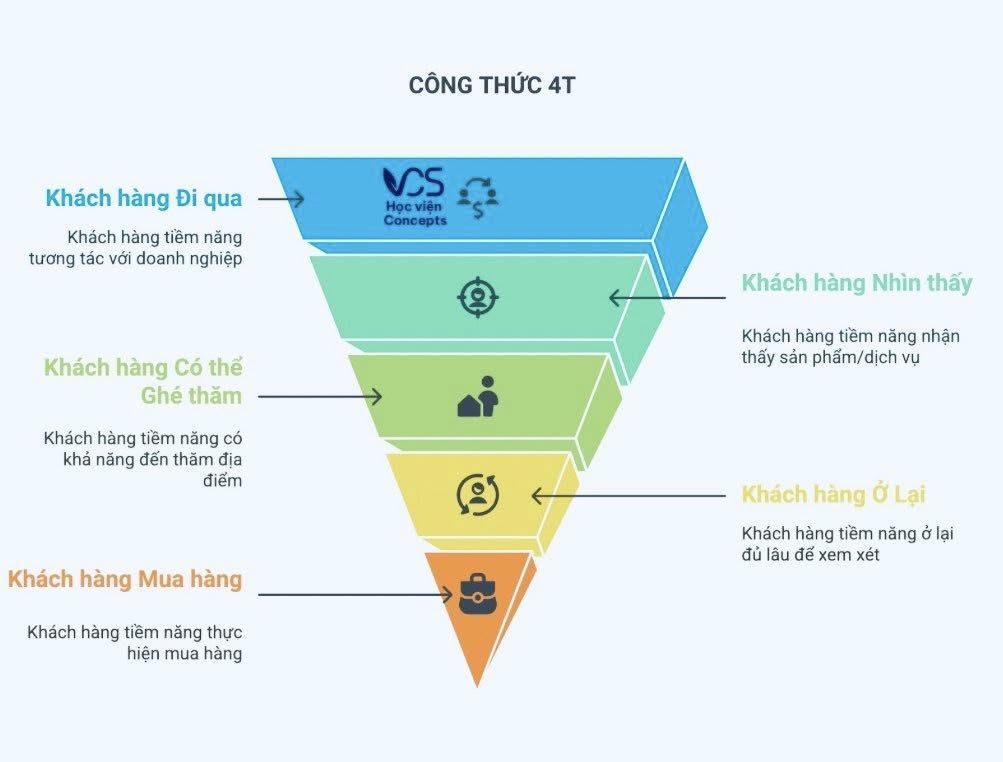
Following my previous post, many of you messaged me with a very interesting question: "If customers have already seen the shop, why don't they come in?" It sounds simple, but this is precisely the point that most shop owners misunderstand.
I'll recount a real-life case that my friend and I discussed. A shop was located right on a busy main road with heavy traffic, a prominent sign, and from the outside, everyone thought it was a prime location. The owner believed that simply putting up a large sign would attract customers. But after observing for a longer time, I noticed something completely different: almost no cars slowed down. They saw the sign, and then drove on.
The problem isn't the ground. The problem is the driver's brain.
When a person is driving, the brain has to process many things at once: maintaining distance, observing other vehicles, reading road signs, and processing directions. Studies on driving behavior show that when there is too much information in a short period of time, drivers are prone to "information overload," leading to quick decisions, overlooking or performing safer actions instead of trying something new.
Simply put: the human brain always prioritizes safety and ease, not curiosity.
Many people opening shops are looking at the location from the perspective of someone standing still:
– clearly visible
- large frontage
- East road
But drivers are in a completely different situation. They are under time pressure and have to handle many tasks simultaneously. Studies on traffic behavior show that when faced with a decision within a limited time, people often choose the least risky option, which means… continuing to drive.
That's why I often say: roadside shops aren't just about marketing; they're about cognitive load.
If customers want to visit your restaurant, they must do three things in a row:
– Seen
– Understand how to access
– Feeling safe enough to turn
Just one step that makes them think more, for example, a narrow entrance, a difficult turn, or a fast-moving car behind, and their brain will automatically choose the simpler solution: ignore it.
This is something I've seen happen repeatedly while working with business owners. Some locations may not look particularly striking, but because they're easy to get in and out of, customers naturally flock there. Conversely, there are places that everyone praises as beautiful, but they silently lose customers every day because customers see them and... hesitate to visit.
The biggest takeaway I've learned after years of working in real estate is: we often judge a location by the eye of the business owner, but customers make decisions based on the feeling of being on the go. And that feeling is biological, not emotional.
If anyone has ever accompanied me on a site survey, they'll hear me repeat one thing over and over: for a roadside shop, there are only three things that need to be done right: Accessible, Parkingable, and Exitable.
It sounds simple. But the more I travel, the more I realize this is the most overlooked thing.
I once went on a site survey with a business owner preparing to open a new location. The spot was great, on a main road with good traffic, and the view from the front was very open. But after observing the traffic for a while, I noticed a small problem: cars had to slow down sharply to get in, and there were constantly cars speeding behind. This meant the driver had to be a little "risky" to pull over. The owner said, "It'll probably be fine, customers will come in when they get used to it." But I thought differently. New customers are what determine growth, and relying solely on repeat customers will make it very difficult for the business to thrive.
Going into a bit more detail, I'll share the perspective I usually use when evaluating roadside spots:
#1. ENTER – Is it easy to make a decision?
It's not enough to just "have an entrance." The real question is: Does the driver feel safe turning in? If they have to brake suddenly, make a sharp turn, or fear the car behind honking, their brain will automatically choose the safe option: keep going. This is a very natural human reaction while driving. They don't want to create additional risks just to try a new place. In fact, I've seen many seemingly beautiful shops that put customers in a very difficult decision-making situation in just a few short seconds.
#2. DO – Does it make guests feel comfortable?
Many people think parking is just a secondary aspect. But in reality, it's the most noticeable factor for customers. In opening a store, the ratio between seating and parking is always considered a very important element because it directly affects the customer experience. I often refute a misconception: "If there's a lack of parking, customers will have to find their own way." Not necessarily.
Customers are becoming increasingly impatient. If they have to struggle to find a parking spot, their initial enthusiasm is dampened. And that initial feeling strongly influences whether or not they will return.
#3. RA – The most forgotten part
Interestingly, during the survey, almost everyone looked at the entrance. But very few paid attention to the exit. Why? Because during the survey, we were standing outside looking in. But customers were thinking: "Will it be easy to get out after I finish eating?" If it's difficult to get out, requires a long wait, involves a dangerous U-turn, and negatively impacts the overall experience, it will immediately lose points.
A good store isn't just about easy access; it should also give customers the feeling of being able to visit quickly, leave quickly, and without any hassle.
After years of working in real estate, I've realized something quite painful: many business owners invest heavily in design, marketing, branding, etc., but overlook the basic customer experience. Yet, this is what ultimately determines whether a customer will enter or not. Looking deeper, the "Enter - Park - Exit" aspect isn't just about traffic engineering; it's about human behavior.
Customers always choose the easiest option. And the store that makes the visit feel the most natural wins.
If you're preparing to open a store, or are weighing many options, sometimes the most important thing isn't to go look at more locations… but to go back and look at these three "basic but crucial" things: Accessibility – Parking – and Exitability. Because ultimately, customers don't enter a store based on… emotion. They enter with a decision made in a few seconds: "Is it easy to visit? Is it inconvenient? Is it safe?"“
If you want me to work with you to assess potential locations based on behavioral logic (not just "beautiful - busy - cheap"), I have a Training & Mentoring program for opening a location: we'll sit down together to finalize the formula for selecting a location, conduct on-site surveys, and make decisions about signing/not signing based on real risks. If you're interested, message me "OPEN A LOCATION," and I'll send you a checklist for checking potential locations.
If you are running or planning to open a fast-food business – such as takeaway coffee, bubble tea, sandwiches, office lunch sets, or meals under 100,000 VND – there is one customer group you cannot ignore: office workers.
Because the fast-moving consumer (FMCG) model relies on three very clear things: repeated daily purchases, quick decisions, and short travel distances. Office workers go to work 5-6 days a week. They need coffee in the morning, a quick lunch, and a drink in the afternoon. They don't have time to travel far or think too much. They choose what's near, fast, and convenient.
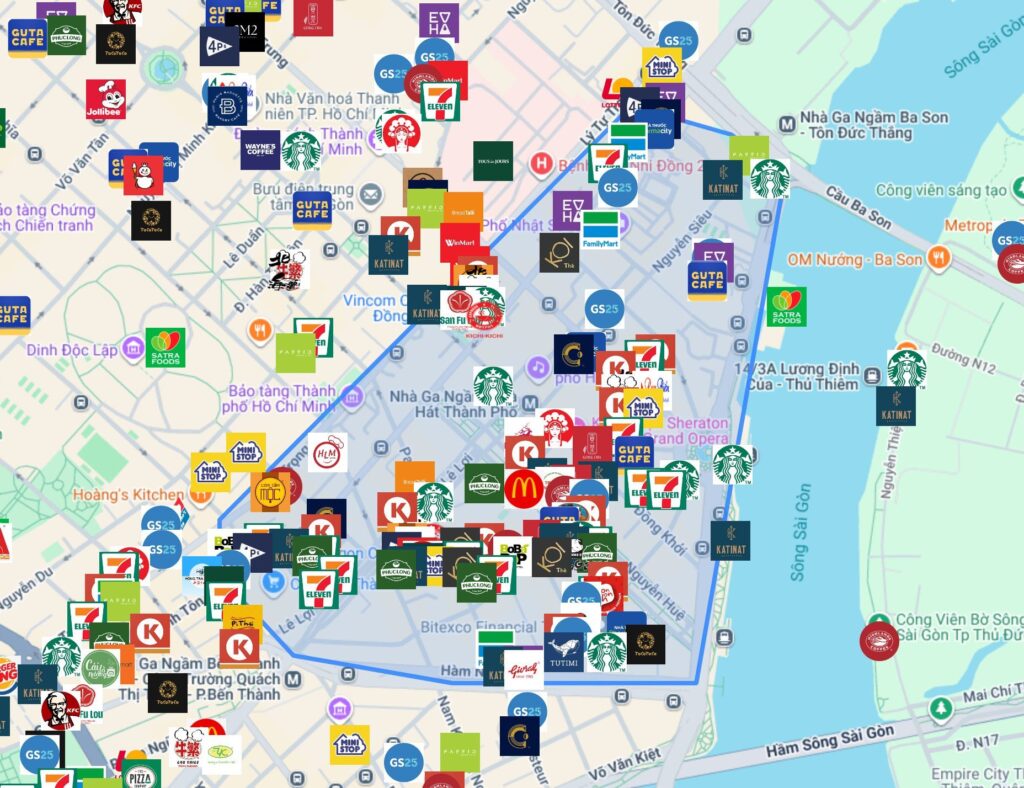
This morning, I opened the map and zoomed in on the Duy Tan – Tran Thai Tong – Ton That Thuyet area. I plotted a 10-minute walking radius around the office core. When I turned on the data layer, the picture became very clear: an area of approximately 75.87 hectares, with a permanent population of just over 8,000 people in about 1,868 buildings. However, the number of office workers operating during the day reaches 75,708 people. This means that during the day, the actual number of people in the area is almost 10 times higher than the resident population. I compiled this figure from data from the General Statistics Office (2019 Population Census and estimates for 2023–2024) combined with data on office buildings and labor force by area.
Looking at the map, it becomes clear: this isn't just an eastern district, but a concentrated consumer cluster. At 11:30 a.m., crowds pour out from dozens of buildings. If your store is within a 300-500m radius in the right direction of traffic, you're practically touching the money flow. If it's off-axis or on the wrong side of the road, you could lose 30-50% of your revenue without understanding why.
According to NielsenIQ, over 60% office workers in major cities eat out at least 3–5 times a week. Euromonitor's Vietnam Foodservice report also shows that the 22–40 age group in urban areas is the main consumer force for the coffee and fast-food segment, with a high priority on convenience and speed. Simply put: they buy frequently and buy nearby.
What I learned from looking at the map wasn't "there are a lot of people here," but "the right people I need are concentrated here." When opening a store, you shouldn't look at the traffic, but at the flow of people going to work. You shouldn't ask "is it crowded?", but "is this the right profile?".
I'm building a map data layer so that anyone opening a store can see this picture: the population density, the number of office workers, their travel routes, and the actual walking radius. Because choosing the right location isn't about luck. It's about understanding the data and understanding customer behavior.
One thing I've realized after many years in this business is that opening a store isn't too difficult, but developing a truly successful store is a completely different story.
Many people think these two things are the same. But in reality, they are very different. Opening a store sometimes only requires finding a location, renovating it, opening for business, and starting to sell. Developing a store, however, is a much longer process, beginning even before the store exists and impacting it for many years afterward.
Having worked in this field for a long time, I've realized that developing a store is actually a very comprehensive job. It's not just about finding a location. Those in this profession have to go through many things that outsiders often don't see. There are times when you just stand on the street observing the flow of traffic and people, watching where they stop, how they pull over, or if they just drive by and go on. There are times when you have to sit for hours in a coffee shop to get a feel for the "true flow" of that area.
But observation is only a small part of it. Then there's a whole series of other questions: who are the customers in this area, is it right for the business model I intend to open, what is the purchasing power of that area, and how much revenue would I need to generate to cover the costs if I rent this location? Sometimes I have to sit down and break down each number to see if the calculation is reasonable.
Next comes the contract. Developers must carefully read the lease agreement: clauses regarding price increases, lease duration, repair rights, termination rights, etc., because even a small detail can cost the business dearly later on.
But the work doesn't stop there. There are points to inquire about regarding land and property law, zoning regulations, business licenses, and fire safety. Sometimes you have to work with the landlord, the real estate agent, and the neighbors. There are even cases where you have to go to the local ward or ask the local police to ensure that there won't be any problems when you open the store later.
Jokingly speaking, the job of developing a retail store is like a combination of all sorts of things: market research and analysis, negotiation, contracts, legal matters, working with local authorities… you have to know a little bit about everything, and sometimes you even have to handle things yourself.
The more I work, the more I realize an important thing: the risks of a business location often lie not in the present but in the future. Before opening, everything seems fine. Busy street, beautiful storefront, new building, and the rent seems reasonable. But when you look closer, you see many problems that nobody initially noticed. There are places with lots of traffic but not the target customers. There are places that look bustling but customers only pass by instead of stopping. There are places that look very promising but after only a few months of opening, the revenue isn't enough to cover the costs.
I've met many passionate shop owners. Their products aren't bad, the space is well-invested, and they put in a lot of effort to run it. But in the end, they still struggle to keep it going. Not because they did something fundamentally wrong, but because from the start, the shop was placed in a location that wasn't really suitable. When the foundation is wrong, the more you try to run it, the more tiring it becomes.
Therefore, I've always thought that the store development profession is actually about helping businesses reduce the probability of making the wrong choice. A location decision isn't just about whether or not you can open a store, but about the store's cash flow for many years to come. Rent, initial investment, staff, operations… it all starts with one choice: where to open.
Interestingly, this profession is also somewhat "lonely." When things go well, few remember what the person who chose the location did. But when things go wrong, the question often comes back immediately: "Why did you choose this location back then?" Perhaps that's why a good developer isn't someone who visits the most locations, but rather someone who can spot risks others don't see and dare to say no to seemingly perfect locations.
After many years in the business, I've realized that most store failures don't start with marketing or operations. They begin much earlier, from the moment the business decides where to open.
Simply saying "it's crowded," "it has a nice storefront," or "it looks okay" is usually not enough. Opening a store can be quick, but developing a truly successful business requires a lot of thought before signing the contract.
These past few days, retailers have been talking a lot about Coolmate, a fashion brand that rose to prominence online, opening offline stores. For many, this is quite surprising, as Coolmate was once considered a very typical D2C case: selling online, optimizing its supply chain, and employing strong digital marketing. But if you look at the broader context of the current retail landscape, this move is actually quite logical.
About three years ago, while talking to some retail business owners, I shared a rather simple idea: sooner or later, big online brands will have to open offline stores. At the time, many didn't believe me; some even said bluntly, "You're just focusing on physical stores, so you only value offline ones. They're making hundreds of billions selling online!" I just laughed and said, "Really?" Actually, that idea came from a book I read quite a while ago, "The Unique Retail Experience" by Steven Dennis. This book clearly states that retail isn't dead, it's just changing shape. And one of the biggest changes is that customers no longer buy based on channels, but based on experiences.
Looking at the Vietnamese market in recent years, the picture is very clear. E-commerce is growing extremely rapidly. In 2024, the size of the Vietnamese e-commerce market exceeded $25 billion and continues to grow strongly every year. In 2024 alone, Vietnamese people spent approximately $16 billion on online shopping, equivalent to more than $40 million per day. However, if we put this figure into the total retail market, e-commerce still only accounts for about 8-10% of total retail sales in Vietnam. This means that online sales are growing very quickly, but offline sales still constitute the majority of the market.
But the biggest problem with online selling today isn't the market size, but the ever-increasing costs. In the early years of the e-commerce boom, many platforms strongly supported sellers: low fees, subsidized shipping, and lots of free traffic. But in recent years, the story has started to change. Shopee has adjusted its fees from around 41 TP3T to 101 TP3T depending on the product category, while TikTok Shop and other platforms have also continuously increased commission and transaction fees. If you add payment fees, promotional programs, free shipping, affiliate fees, etc., the total cost of selling on these platforms can now range from 9–151 TP3T of revenue, and in some cases even up to 171 TP3T.
To put it simply, if you sell a product for 500,000 VND on an e-commerce platform, the platform fees and operating costs alone could amount to around 60,000–80,000 VND. This doesn't even include advertising costs, livestreaming, KOLs, affiliate marketing, etc. Many brands are actually spending 20–30% of their revenue on online marketing just to maintain sales momentum.
Let's take a simple example to make the comparison easier to understand. Suppose a brand sells shirts at an average price of 350,000 VND. If they sell on e-commerce platforms, the platform fees and promotions are around 121 million VND, meaning each order costs about 42,000 VND. If they sell 10,000 orders per month, the platform fees alone would be around 420 million VND. This doesn't even include advertising. Meanwhile, if an offline store in a central location costs around 120-150 million VND/month in rent, plus operating costs, it could reach around 200 million VND. But that store, besides selling directly, also helps increase brand awareness, increase online purchases, reduce advertising costs, and create a better customer experience. In other words, the cost isn't just the cost of selling, but also the cost of marketing.
Therefore, many online brands are beginning to view offline stores from a different perspective: not just as points of sale, but as a marketing and experiential channel. This is also something Steven Dennis emphasizes frequently in his book: today's stores are more like a "media channel" than just a place to sell goods. They help customers try products, understand the brand, create content, and build trust. And in a world where online advertising is increasingly expensive, these physical touchpoints become crucial.
From a real estate perspective, I also see a rather interesting signal. When zooming in on the Mapdy app in the central area of Ho Chi Minh City, within a 500m radius, I found more than 140 street-front properties listed for rent. This indicates a fairly large supply of commercial space after a period of market volatility, but at the same time, demand from brands is returning. In fact, recently I've seen many brands starting to re-evaluate locations, especially those with a strong online presence.
Ultimately, it's not about whether online wins over offline or offline wins over online. Each business will have a different strategy. Some brands are suited to online, some need a strong brick-and-mortar store system, and many choose a hybrid model. The most important thing isn't choosing which channel, but understanding your customers and designing an experience that suits them.
The retail world is changing rapidly. What worked yesterday may not work tomorrow. And perhaps that's why brands like Coolmate are starting to move away from online to experiment with new channels. It's not because online is no longer good, but because retail today is a story of a multi-channel ecosystem – where online and offline support each other.