(Series: Secrets of the Roadside Shops)
If anyone has ever accompanied me on a site survey, they'll hear me repeat one thing over and over: for a roadside shop, there are only three things that need to be done right: Accessible, Parkingable, and Exitable.
It sounds simple. But the more I travel, the more I realize this is the most overlooked thing.
I once went on a site survey with a business owner preparing to open a new location. The spot was great, on a main road with good traffic, and the view from the front was very open. But after observing the traffic for a while, I noticed a small problem: cars had to slow down sharply to get in, and there were constantly cars speeding behind. This meant the driver had to be a little "risky" to pull over. The owner said, "It'll probably be fine, customers will come in when they get used to it." But I thought differently. New customers are what determine growth, and relying solely on repeat customers will make it very difficult for the business to thrive.
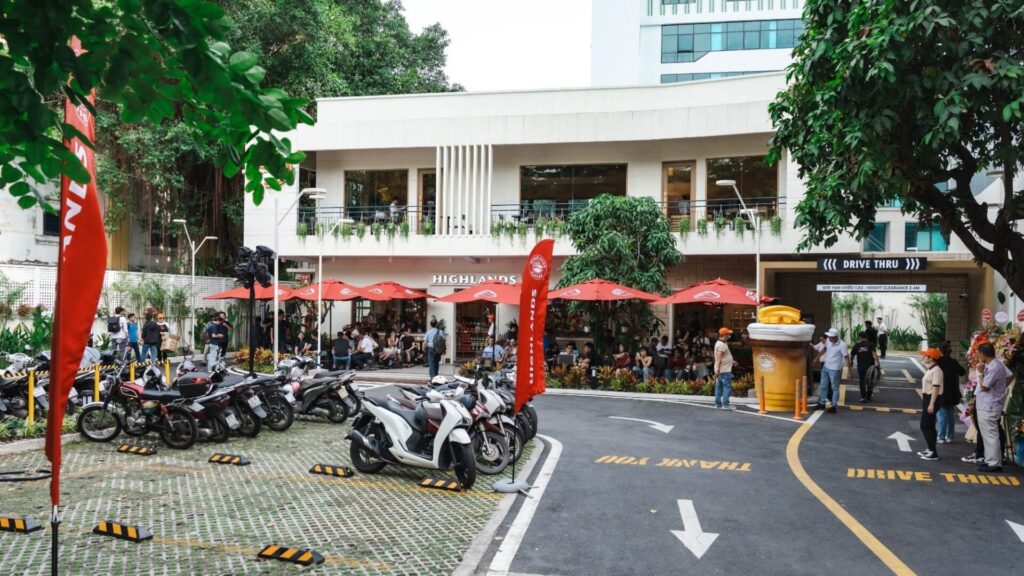
Going into a bit more detail, I'll share the perspective I usually use when evaluating roadside spots:
#1. ENTER – Is it easy to make a decision?
It's not enough to just "have an entrance." The real question is: Does the driver feel safe turning in? If they have to brake suddenly, make a sharp turn, or fear the car behind honking, their brain will automatically choose the safe option: keep going. This is a very natural human reaction while driving. They don't want to create additional risks just to try a new place. In fact, I've seen many seemingly beautiful shops that put customers in a very difficult decision-making situation in just a few short seconds.
#2. DO – Does it make guests feel comfortable?
Many people think parking is just a secondary aspect. But in reality, it's the most noticeable factor for customers. In opening a store, the ratio between seating and parking is always considered a very important element because it directly affects the customer experience. I often refute a misconception: "If there's a lack of parking, customers will have to find their own way." Not necessarily.
Customers are becoming increasingly impatient. If they have to struggle to find a parking spot, their initial enthusiasm is dampened. And that initial feeling strongly influences whether or not they will return.
#3. RA – The most forgotten part
Interestingly, during the survey, almost everyone looked at the entrance. But very few paid attention to the exit. Why? Because during the survey, we were standing outside looking in. But customers were thinking: "Will it be easy to get out after I finish eating?" If it's difficult to get out, requires a long wait, involves a dangerous U-turn, and negatively impacts the overall experience, it will immediately lose points.
A good store isn't just about easy access; it should also give customers the feeling of being able to visit quickly, leave quickly, and without any hassle.
After years of working in real estate, I've realized something quite painful: many business owners invest heavily in design, marketing, branding, etc., but overlook the basic customer experience. Yet, this is what ultimately determines whether a customer will enter or not. Looking deeper, the "Enter - Park - Exit" aspect isn't just about traffic engineering; it's about human behavior.
Customers always choose the easiest option. And the store that makes the visit feel the most natural wins.
If you're preparing to open a store, or are weighing many options, sometimes the most important thing isn't to go look at more locations… but to go back and look at these three "basic but crucial" things: Accessibility – Parking – and Exitability. Because ultimately, customers don't enter a store based on… emotion. They enter with a decision made in a few seconds: "Is it easy to visit? Is it inconvenient? Is it safe?"“
If you want me to work with you to assess potential locations based on behavioral logic (not just "beautiful - busy - cheap"), I have a Training & Mentoring program for opening a location: we'll sit down together to finalize the formula for selecting a location, conduct on-site surveys, and make decisions about signing/not signing based on real risks. If you're interested, message me "OPEN A LOCATION," and I'll send you a checklist for checking potential locations.
Image source: Highlands Coffee
Minh Phan – Choosing the right location
Did you find this article helpful?
Sign up to receive new articles every week on store layout and retail development.