(Series: Secrets of the Roadside Shops)
Following my previous post, many of you messaged me with a very interesting question: "If customers have already seen the shop, why don't they come in?" It sounds simple, but this is precisely the point that most shop owners misunderstand.
I'll recount a real-life case that my friend and I discussed. A shop was located right on a busy main road with heavy traffic, a prominent sign, and from the outside, everyone thought it was a prime location. The owner believed that simply putting up a large sign would attract customers. But after observing for a longer time, I noticed something completely different: almost no cars slowed down. They saw the sign, and then drove on.
The problem isn't the ground. The problem is the driver's brain.
When a person is driving, the brain has to process many things at once: maintaining distance, observing other vehicles, reading road signs, and processing directions. Studies on driving behavior show that when there is too much information in a short period of time, drivers are prone to "information overload," leading to quick decisions, overlooking or performing safer actions instead of trying something new.
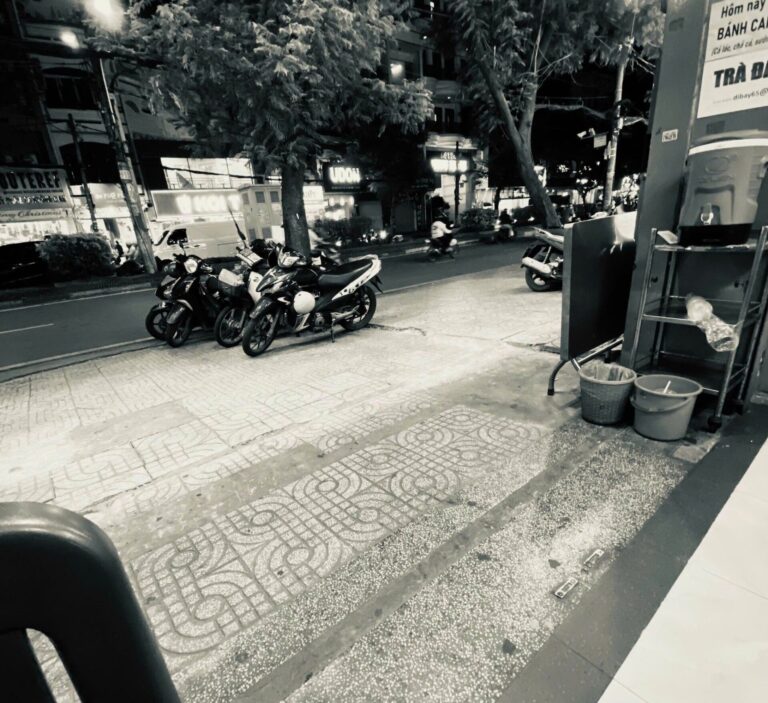
Simply put: the human brain always prioritizes safety and ease, not curiosity.
Many people opening shops are looking at the location from the perspective of someone standing still:
– clearly visible
- large frontage
- East road
But drivers are in a completely different situation. They are under time pressure and have to handle many tasks simultaneously. Studies on traffic behavior show that when faced with a decision within a limited time, people often choose the least risky option, which means… continuing to drive.
That's why I often say: roadside shops aren't just about marketing; they're about cognitive load.
If customers want to visit your restaurant, they must do three things in a row:
– Seen
– Understand how to access
– Feeling safe enough to turn
Just one step that makes them think more, for example, a narrow entrance, a difficult turn, or a fast-moving car behind, and their brain will automatically choose the simpler solution: ignore it.
This is something I've seen happen repeatedly while working with business owners. Some locations may not look particularly striking, but because they're easy to get in and out of, customers naturally flock there. Conversely, there are places that everyone praises as beautiful, but they silently lose customers every day because customers see them and... hesitate to visit.
The biggest takeaway I've learned after years of working in real estate is: we often judge a location by the eye of the business owner, but customers make decisions based on the feeling of being on the go. And that feeling is biological, not emotional.
Minh Phan – Choosing the right location
Did you find this article helpful?
Sign up to receive new articles every week on store layout and retail development.