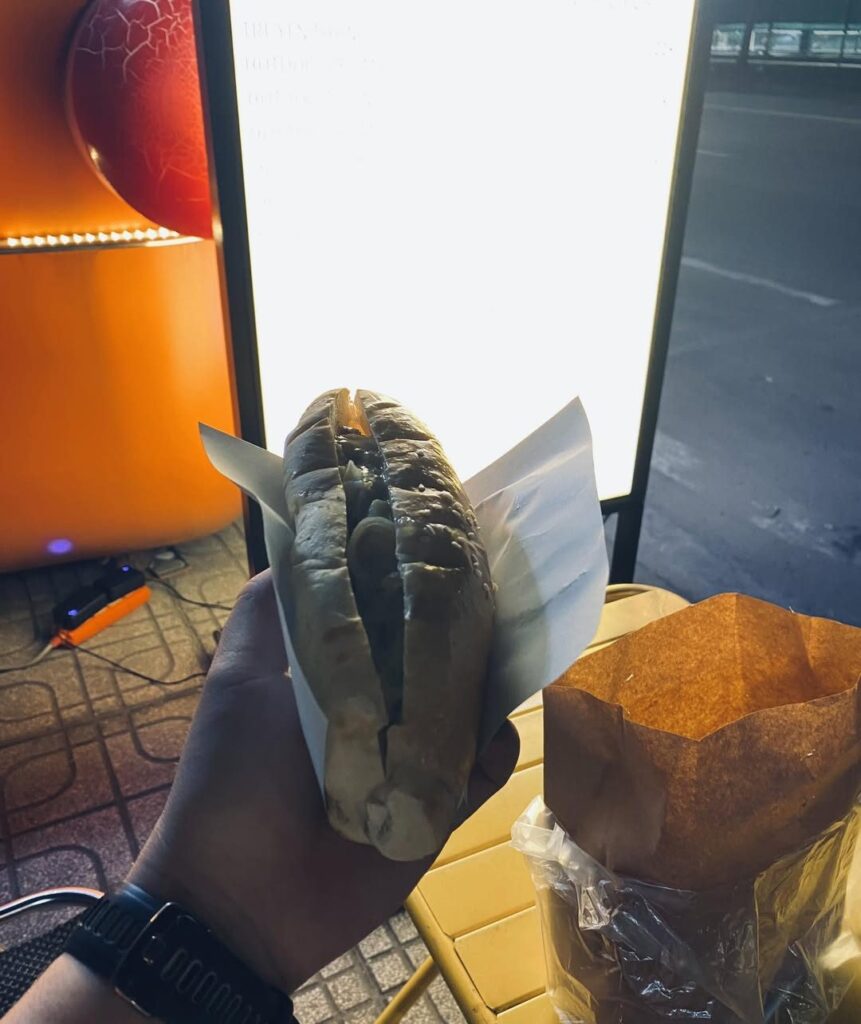
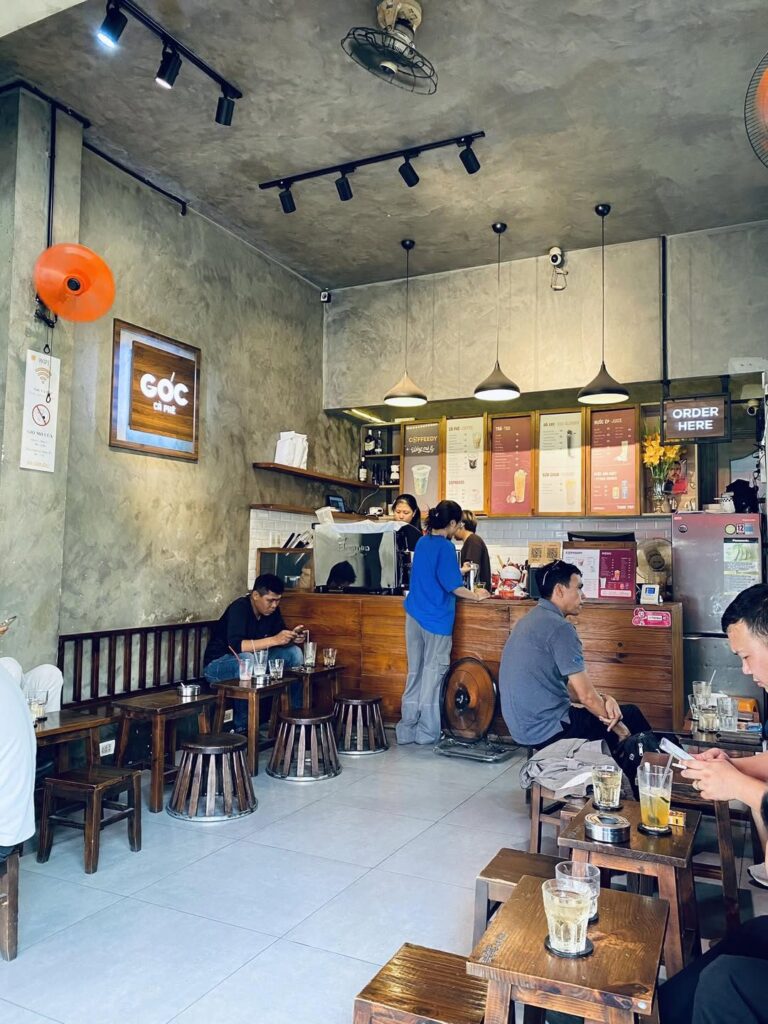
Late in the afternoon, after a tiring day of traveling, I lingered at the office, not wanting to go home. I suggested to a younger colleague that we go out for a light meal. Suddenly, I remembered there's a restaurant near the office, on Bau Cat street, that sells authentic Da Nang cuisine. I'd been there a few times before, and the food was delicious and the taste was great.
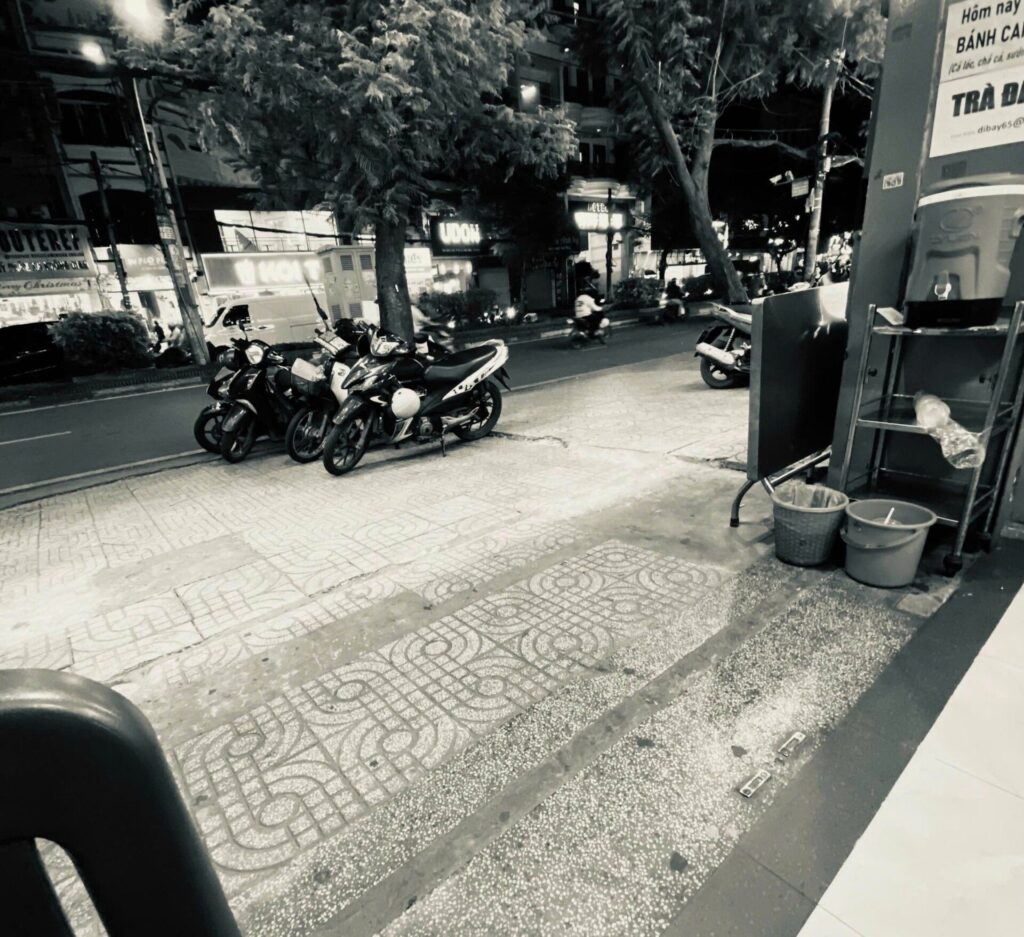
Every time I go there, the owner sets up a few small tables on the sidewalk. Sitting there eating, watching the cars go by, feeling the cool breeze, and experiencing something very down-to-earth, very Saigon. Today, when I returned, the restaurant was much tidier; there wasn't a single table left on the street.
I asked casually, "Hey, aren't you going to put the tables outside for some fresh air today?"“
The shop owner chuckled softly, his voice sounding a little tired: "We're clearing the sidewalks, you know. If we don't, we'll get fined. And if we get fined, it's like we're working for free."“
Hearing that, I suddenly felt a lump in my throat. Not because the meal had to be eaten indoors, but because the familiar feeling of eating on the sidewalk had suddenly disappeared.
I remember a previous trip to Hanoi where I visited a famous street known for its rolled pho. My friend said it used to be very crowded, with tables full every night. But that day, walking along the entire street, it was unusually deserted. When I asked the staff, they explained that they no longer allow outdoor seating; everyone has to sit inside. Regular customers who usually sit on the sidewalk can't stand the stuffy atmosphere inside, so they've been coming less and less.
I'm not telling these stories to complain or blame anyone. Management is necessary. But for many people, the sidewalk is more than just a place to set up a table and sell a few dishes. It's their livelihood, their life, the source of support for their entire family behind that small stall.
Sidewalks are also a part of the city's memory. They're places where people eat while watching the street, where vendors sell their goods while observing the flow of people passing by. A small, very real economy.
Hopefully, instead of campaigns that come and go, there will be more long-term, clear approaches so that vendors know how to adapt and stay afloat. So they don't have to worry every night, wondering if they'll still be able to sell in their usual spot tomorrow.
It was a somber evening, when those in the food and beverage business were struggling with a multitude of challenges: a difficult economy, rents that weren't decreasing but actually increasing, rising raw material prices, uncertainty about taxes, and constant changes in the environment…
Keep persevering, you struggling to make a living in this glamorous city.
This morning, I made another very… basic mistake. A store in Phu Nhuan. A location where, judging by the number of stores that have already opened, I was fully aware of the risks. I knew the area was subject to old zoning regulations, I knew there was a high chance of encountering building permit issues, and I also knew that if I didn't thoroughly check from the start, there would be unexpected costs during implementation. But I still underestimated it. I underestimated it because I thought I had encountered many similar cases, because I thought it wouldn't be that complicated, and because the contract negotiation phase went quite smoothly. And the result was not surprising. When we started working on it, the company had to spend a considerable amount of extra money just to process paperwork, obtain permits, and make corrections that could have been easily identified before signing the contract if I had been patient and thorough enough.
I'm not telling this story to complain. I'm telling it to say something very true: we don't make mistakes at the opening; we often make mistakes before even signing the contract. This is true for me, someone who has opened many stores, not just those opening for the first time.
I've met many people opening their first store, and they usually come with a similar feeling: a mix of excitement and anxiety. Excitement because they finally have something "of their own." Anxiety because the money invested is real, and the pressure is real. They often say the same things to me: "I'm afraid I've chosen the wrong location," "I'm not familiar with the market," "I lack experience.".
That sounds right. But that's not the real problem. The real problem is they're making a huge financial decision, one that could last three to five years, while lacking the capacity to understand what they're signing into. They don't grasp the scale of the game they've just entered, but they have no right to delay. The landlord is urging, the real estate agent is pressuring, and all they have in their heads is a familiar thought: "If I don't close the deal, I'll lose." And so they sign.
From here, blind spots begin to appear.
– The first blind spot is not knowing what constitutes a viable business. Many people can't answer basic questions: how many customers per day are needed for the business to survive, what is the minimum revenue required to avoid prolonged losses, what percentage of their financial capacity is covered by rent, and what is the maximum amount they will lose if they fail to meet the target for the first three to six months? Without a clear threshold, every location seems "acceptable," and that's why newcomers are so quick to agree.
– The second blind spot is confusing feeling with reality. Seeing a lot of cars means you think there are many customers. Seeing a new area means you think it has potential. Seeing many people asking questions means you think there is demand. But reality is different. A lot of cars doesn't necessarily mean people are willing to stop. People who stop don't necessarily go inside. Going inside doesn't necessarily mean buying. And buying doesn't necessarily mean they'll come back. These illusions make newcomers overconfident before they truly are capable, and that's a very dangerous kind of confidence.
– The third blind spot comes from those around you. Brokers need deals. Landlords need to rent out properties. None of them are responsible for whether your store survives or fails after six months. But newcomers lack the experience to distinguish who is advising, who is persuading, and who is leading them in a direction that benefits them. And so they listen, and sign.
– The final blind spot, and the most painful one, only appears when the store fails to meet expectations. At that point, very few people look back at their decision to choose the location. They blame insufficient marketing, poor staff, unreasonable pricing, or bad timing. It's not that they're afraid to face the truth, but because looking back at the decision to choose the location is looking back at the biggest and most painful decision. Admitting it was wrong means admitting they were wrong from the start.
The story this morning in Phu Nhuan reminded me of something very important: experience doesn't make you immune to mistakes; it only helps reduce the probability of error if you're not overconfident. For first-time store owners, the problem isn't a lack of effort or passion, but rather that they're making a big decision without the tools to identify the risks, and no one is there to help them stop in time.
If I had to summarize, these are 5 lessons I think first-time business owners should remember to avoid paying too high a price.
#1: Don't sign the contract until you know the store's survival threshold. Without knowing how many customers are enough or what the minimum revenue is, any location might seem suitable.
#2: Don't trust your feelings more than the data. High traffic, new areas, many inquiries – all need to be verified by actual purchasing behavior.
#3: Always remember that everyone has their own interests, except for the person paying the rent. Ask yourself: if I lose money, who is responsible?
#4: Understand that the biggest mistakes often happen before the grand opening. Marketing, operations, and personnel are secondary; the decision to choose a new location is what locks in long-term risk.
#5: Ultimately, knowing when to stop isn't cowardly, it's wise. Not signing a wrong contract might be the best decision in your entire business journey.
If you're preparing to open your first store, remember that you don't need to rush. You just need to avoid signing the wrong documents. And if you're feeling hesitant, anxious, or not entirely at ease about a big decision, that's not wrong. It's wrong to ignore those feelings and sign anyway.
After breakfast, I ask my wife for money to buy coffee. Those of us starting businesses are probably used to this; we don't have our own money, we always have to ask our wives for it. . I drove to a small cafe in the countryside and ordered a latte. I asked for the bill. The young man spoke too softly, I couldn't hear clearly, so I took out my wallet and gave him 20,000 dong, thinking it was a reasonable price for a latte. When I got to the car, he ran after me, gave me back 5,000 dong, and said, "Just 15,000 dong, brother." I laughed and casually asked, "Are you making a profit selling a latte for 15,000 dong?".
He replied very naturally and honestly: "Of course, sir, it's the ground floor of my house." ”.
The saying sounded funny, but as soon as I started the car and drove away, I felt a pang of bitterness. "The premises"—those three words are one of the most common traps for those opening a business, especially first-timers. Yes, the premises are an advantage. But precisely because it's an advantage, it can easily become a weakness. It makes people complacent. Complacent because they don't have to pay rent, so they think opening a business will be profitable. Complacent because they don't calculate all the costs. And most dangerously, they don't factor in their own labor and salary.
Let's do a practical calculation. If the space wasn't her own but rented, let's say it only cost 5 million VND/month. If she didn't sell herself but hired someone, the minimum salary would still be 8 million VND/month. Thus, there are two very clear expenses that are completely omitted from the calculation: rent and salary. That's a total of 13 million VND/month. So when we talk about "profit," where does the profit really come from? The profit comes from not having to pay rent and not having to pay her own salary. If sales are weaker in a given month, not enough to cover that 13 million VND, then essentially it's a loss, only this loss is masked by the phrase "renting her own space.".
I used to sell coffee, so I have a basic understanding of the costs. The coffee I had this morning was decent; with that quality, I estimate the coffee costs around 250,000 VND per kilogram. Using a machine, after accounting for losses and raw materials, one kilogram makes about 40 cups. A quick calculation shows that the cost of coffee, milk, cups, lids, straws, ice, packaging… each cup costs nearly 10,000 VND. Selling at 15,000 VND, the costs already exceed 661,000 VND. This is a very alarming figure in the F&B industry. This doesn't even include electricity and water, equipment wear and tear, or slow sales days. Therefore, the idea of "the more you sell, the more you lose" is entirely possible, not just a figure of speech.
If the story had ended with just a small coffee shop in front of a house, there wouldn't be much to say. But what makes me think is that many people are used to this way of calculating costs and then take it to opening more locations, even franchising. They're used to not calculating rent, used to not calculating salaries, used to profiting from "hard work." When they open a physical store, rent a place, pay real salaries, the model starts to fall apart. At that point, people often blame unsuitable locations, a difficult market, or bad timing. Few people look back at the root cause: the model from the beginning relied on temporary advantages, not on a sustainable structure.
On the way home, I suddenly remembered something an older brother once said to me a long time ago: "Coffee isn't just bitter." Yes, coffee isn't just bitter; it's spicy too. The spiciest part is when many people approach coffee with a love for it, with passion, opening cafes impulsively, without careful planning or deep consideration. Then, when it's time to close, they just sigh: "The coffee was too bitter." Actually, it's not the coffee that's bitter, but the decision to open the cafe that was too sweet.
I've been through that myself, so I understand that feeling very well. Understanding it helps me realize that an advantage, if not properly understood, can become a very subtle trap. So subtle that people don't realize they're losing out until they can't bear it anymore.
I used to ask myself that question a lot. Now, other people ask it occasionally. And coincidentally, one evening while out for dinner, I found another very honest answer.
After work, feeling hungry, I planned to stop by a noodle shop near my house. But as I passed by, I saw a newly opened hotdog stand, so I turned back to support it. Partly out of curiosity, and partly because judging by the location, I guessed it would be a bit difficult to sell.
I looked at the menu and saw nearly a dozen items. To be honest, I'm not usually one to eat hotdogs. So I asked the owner, "What's the most popular item here? Could you recommend something good?"”
You recommended the American-style hotdog. While we waited, an 8-year-old boy, the owner's nephew, came out to help with the bill. He looked bright and cute.
A little while later, the owner came out and asked, "Did you enjoy your meal?"”
I said it was fine, then asked further, "Is selling here going well?"”
You smiled sadly: "It's very slow, brother. Luckily, we got the space from my aunt, so it didn't cost any money."”
As we talked further, I learned that you used to work in market development for a major beer company. After quitting your job, you decided to start your own business.
I asked her why. She said very honestly, "I want to do something of my own, honey."”
Hearing that, I saw my old self again. Then I asked, "Your cosplay must be really tall, right?" She was surprised and asked how I knew. I'm familiar with the profession, so I can guess from the menu.
You whispered: Near 60%, sir.
I paused for a moment. Because at that price, a little careful calculation would show that the more you sell, the more you lose. But because it's "property in your own home," and you "do it yourself," many people unintentionally overlook the actual costs.
And at that moment, I realized one thing very clearly: being an employee and being a boss are two completely different worlds.
When you're an employee, you just need to do your job well. Behind the scenes, there's always a system, department, team, and process. No matter what the market is like, your salary will still be regular every month.
When you're your own boss, everything rests on your shoulders: revenue, expenses, cash flow, marketing, legal matters, human resources, operations…
One wrong decision can cost you years of savings. And sometimes, it can even cost you the peace of your family.
Many people are like that hotdog owner; they may have been excellent employees in their previous organizations. But when they become business owners, they realize they need many more skills: finance, business models, location selection, management, risk assessment, and so on.
And I realized: starting a business is no longer just a "try it out" anymore. It's a journey full of risks, many quiet moments, and times when looking back makes my heart sink. But it is precisely because of this that I believe entrepreneurship is a journey of courage.
Be brave enough to step out of your comfort zone. Be brave enough to look directly at your own shortcomings. And be brave enough to learn almost from scratch again. Passion is still important. But passion alone is never enough.
Starting a business is not just about leaving your old job,
Instead, it means accepting to enter a much more difficult game, where every small decision has its own price.
And then, as I closed the book on the events of that evening,
I suddenly felt a heavy heart, a pang of sympathy for those who are struggling to hold onto their own dreams.
May all those on this journey always have enough perseverance and inner peace to continue on the path they have chosen.
Last week, my team surveyed a property in Go Vap. They sent back a report, and reading one section made me laugh, but also gave me a chill down my spine. Because this is a trap that many store owners have fallen into: the "false crowding" phenomenon.
I'm sure we've all had this feeling. Driving past a coffee shop, seeing it always packed with customers coming and going, your mind immediately switches to daydream mode: this shop is doing well, this business model is great, this area has so much potential, I should find a location nearby to open one and share the customers. But life isn't like the movies, and the grass isn't always greener on the other side.
The survey report clearly states: some cafes have customers sitting for an average of 4 hours per visit. It sounds good because the cafe is always crowded, but from a business perspective, it's a mild disaster. Those four hours offer almost no chance of attracting new customers. Tables and chairs are full, but there's no turnover. Revenue remains stagnant, while electricity, water, air conditioning, and Wi-Fi run at full capacity. From the outside, it looks lively and bustling, but inside, the owner sits sighing.
Not to mention the student clientele, who order drinks once and then sit there all day studying, working on projects, or having group meetings. Upselling is difficult, but you can't bring yourself to turn them away. As a result, the cafe is always full, but counting the money at the end of the day isn't fun at all.
Not long ago, many people probably remember how some large coffee chains had to reduce the number of power outlets, and others limited Wi-Fi usage. But doing so immediately drew negative reactions from customers, because from the beginning, we designed the cafes to encourage customers to stay as long as possible: comfortable chairs, spacious tables, cool air conditioning, and strong Wi-Fi. If you invite people to stay, you can't blame them for not wanting to leave.
The problem is: we see the crowd with our eyes, but we don't use our brains to understand the story behind it.
There are many types of crowds. Some are crowded because of good turnover, with customers coming and going constantly. But there are also crowds where customers sit around from morning till evening. These two types look similar, but the business results are worlds apart.
With Site Plus, every time we survey a location with our partners, we never just ask, "Is this place busy?" Instead, we ask further: how long do customers stay, what is the turnover rate, is it possible to sell more, and can the operating costs be sustained? Just a slight deviation can completely change the profit equation.
Many people fall into the trap thinking: this location is too good to be true. But in reality, that "goodness" is sometimes just a beautiful facade. Have you ever encountered such a "false crowd" situation? If so, please share it with Minh so we can learn from each other.
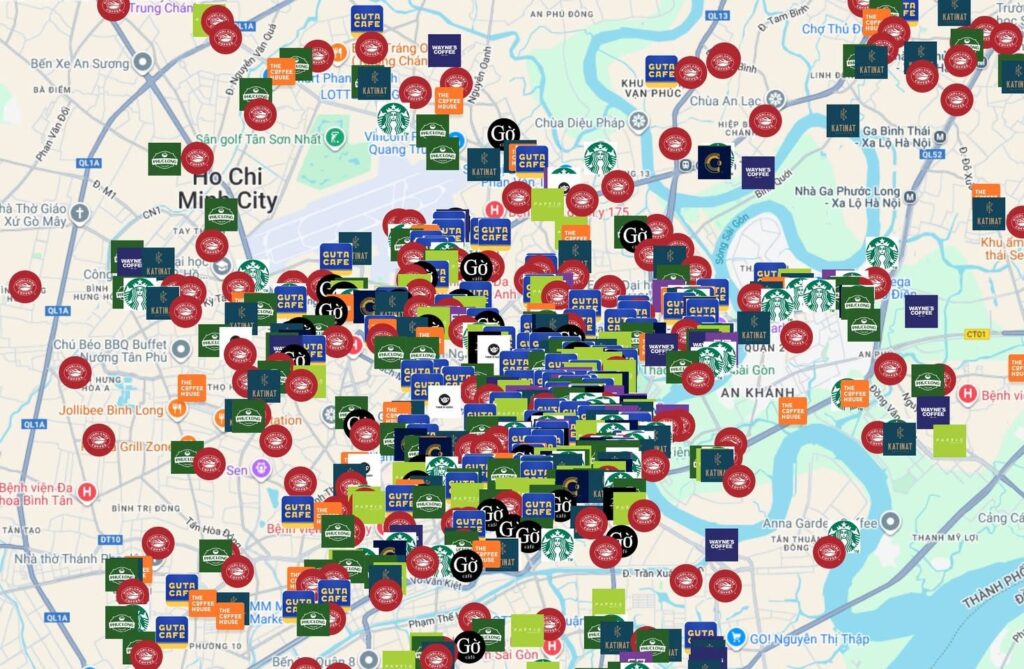
There's something very interesting. When I zoomed in on the map of chain coffee shops in Ho Chi Minh City, what appeared before my eyes was no longer a map but more like a "sea of logos." From District 1, District 3, Binh Thanh, Phu Nhuan, Tan Binh, Thu Duc to District 7, everywhere you look you see Highlands, Phuc Long, Katinat, Starbucks, The Coffee House, Trung Nguyen… Every street corner, every few hundred meters, has a coffee shop. Saigon doesn't lack coffee, it's… overflowing with choices. But paradoxically, the more shops there are, the more people go for coffee.
According to an InsightAsia survey conducted at the end of 2025 with 1,200 chain coffee shop users, 921 TP3T had visited chain coffee shops in the last three months, 731 TP3T visited at least once a month, and notably, 30.41 TP3T visited 1-2 times per week or more, a significant increase compared to 2022. Coffee is no longer just a beverage, but has become a necessity of life. For city dwellers, coffee is gradually becoming a kind of "affordable luxury.".
Amidst economic difficulties, inflation, and austerity measures, people still haven't given up coffee. Why? The report calls it the phenomenon of "Affordable Luxury" – a luxury at an affordable price. A cup of coffee costing 30,000–50,000 VND isn't too expensive, but it's enough to meet friends, change the scenery, work, go on a date, or treat yourself after a tiring day. Statistics show that 401 TP3T users choose to spend 21,000–40,000 VND per cup, a sharp increase from 28.51 TP3T in 2022, and about 451 TP3T spend 41,000–70,000 VND per cup. On average, each person in Ho Chi Minh City spends about 315,000 VND per month on chain coffee, while those who go for coffee weekly spend up to 425,000 VND per month. Coffee is becoming an "uncuttable expense.".
Looking at the store density map, one thing is very clear: Highlands is the most densely populated, from the city center to the outskirts, and that's no coincidence. Highlands currently has about 900 stores nationwide, up from 815 at the beginning of 2025, with Ho Chi Minh City being the key market. According to InsightAsia, 951 respondents knew about Highlands, 921 had drunk their coffee, 681 used it monthly, and 621 of those went weekly. Highlands doesn't need to be the best cafe, but it's always the closest. In the coffee market, convenience is almost as important as taste. 881 users said quality and taste are the number one factors, but 821 considered convenient location almost equally important. Highlands wins through density, becoming the default choice whenever people think of coffee.
While Highlands Coffee relies on scale, Katinat focuses on emotion. Currently, Katinat has approximately 115 stores and has grown rapidly in just a few years. More importantly, it's the brand most frequently mentioned by Gen Z. Its "Instagrammable" atmosphere, retro Saigon design, art, and personality make customers visit Katinat not just for coffee, but to meet friends, take photos, and enjoy the feeling of being in a truly unique space. Surveys show that 79% customers highly appreciate Katinat's ambiance, although they also acknowledge that the cafe is quite noisy during peak hours and leans more towards social than work. In other words, Katinat doesn't sell coffee, Katinat sells vibe.
Starbucks takes a different approach. There aren't many Starbucks stores in Ho Chi Minh City, only about 140 nationwide, concentrated in prime locations. But in return, Starbucks almost always leads in terms of customer satisfaction with its ambiance (88%), menu quality, and service (88% highly rated for the friendliness of its staff). Starbucks caters to important appointments, long work sessions, quiet spaces, and a feeling of being truly served. It's expensive, but worth it for the clientele willing to pay.
Looking at the broader market, by the end of 2025, Vietnam will have over 25,000 coffee shops, with a market size projected to reach approximately US$710 million by 2030. The top 5 chains will have already captured 42% of the market share, a significant increase from 33% in 2021. The market is gradually becoming saturated in major cities and entering a phase of competition based on experience, value, and technology. InsightAsia clearly concludes that the winner must balance four factors: Scale – Experience – Value – Digital. Scale refers to the density of coverage, like Highlands; Experience refers to the attractive spaces, like Starbucks and Katinat; Value refers to combos, promotions, and loyalty, like Phuc Long; and Digital refers to apps, delivery, and customer data. Those who only excel at one thing will easily be eliminated.
Looking back at the map of coffee chains in Ho Chi Minh City, I'm convinced of one thing: this is no longer just a game of opening coffee shops, but a game of conquering territory, habits, and time in customers' lives. Coffee has become a place for work, meetings, relaxation, dates, and a space "between home and work." The chain that captures the most "touchpoints" in the lives of city dwellers will win.
Ho Chi Minh City has no shortage of coffee shops, but only a few chains truly understand how city dwellers live. Coffee is no longer just a beverage; it's an emotional infrastructure of the city. And whoever controls that infrastructure controls the flow of money.
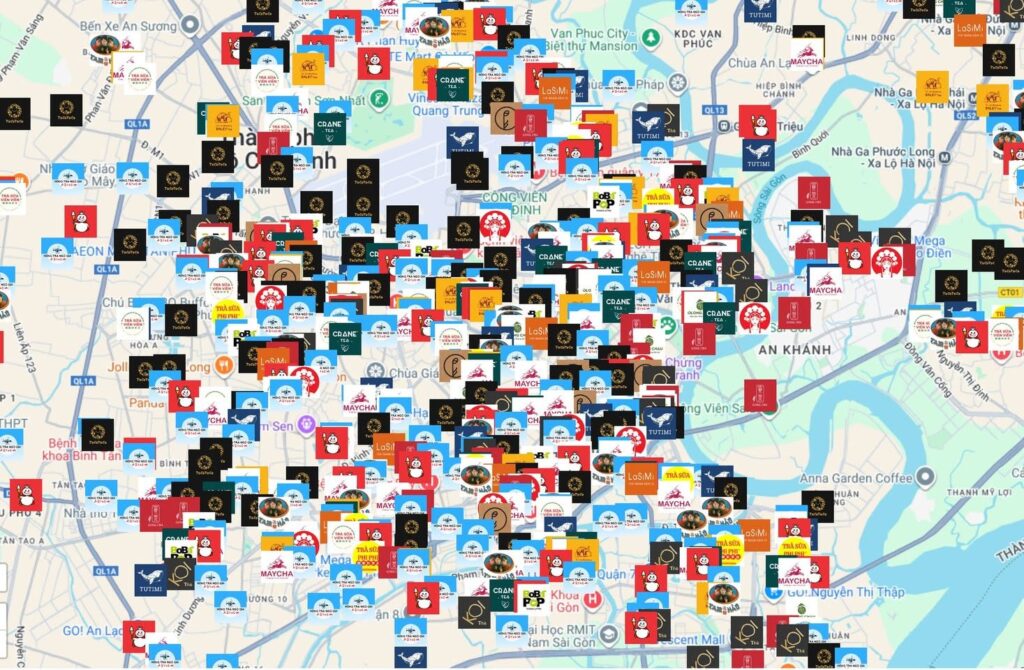
Lately, while surveying locations and browsing maps of bubble tea chains in Saigon, I've had a strange feeling: the market is packed with brands, but whenever CG opens a new location, the entire surrounding area becomes bustling. People flock there out of curiosity, landlords start asking for higher prices, and real estate agents whisper to each other about a major tenant moving in. I'm not trying to argue about right or wrong here. It's simply... curiosity.
I was curious about the business viability of a high-end tea shop model in a context where consumers increasingly prefer low prices, quick purchases, and immediate consumption. Even more curious was the financial strategy behind renting premises for hundreds of millions, or even nearly a billion VND per month.
Looking at the store distribution map, it's easy to see that CG isn't spread out evenly like other kiosk chains. They choose prime locations in the city: corner stores, major thoroughfares, and areas with high concentrations of offices and residential buildings, where simply putting up a sign will attract the attention of a stream of cars. Wherever they open, it becomes a check-in point. It feels more like they're buying locations rather than just renting a space to sell drinks.
Then, when flipping through the rental price lists, the story started to get more interesting.
There are apartments in Binh Thanh, Phu Nhuan, and Tan Binh districts being offered for 180-230 million VND per month for large units with proper ground floor and upper floor arrangements. In the city center, many locations are priced at 30,000-35,000 USD per month, not to mention those approaching 1 billion VND. This is a price range previously seen at banks, car showrooms, or international fashion brands.
I naturally asked myself: with such high rent, how can the shop possibly operate and survive?
Let's take a very common example. Suppose a store rents 200 million VND per month. In the F&B industry, to be safe, rent should generally be somewhere around 10-15% of revenue (I'm giving a simplified perspective so we can easily understand, but in reality, the cost of premises is a fixed expense and cannot be calculated as 1% of revenue). This means that the store needs to generate around 1.5-2 billion VND in revenue each month for the calculation to become manageable. If each drink sells for an average of 60,000-70,000 VND, then it needs to sell around 800-1,000 drinks per day, consistently for 30 days.
That number isn't impossible, but it clearly requires a very good location, a very smooth operating model, and a brand strong enough to attract repeat customers, not just a few weeks of high demand.
But for properties costing $30,000 a month, it's a different story. At this point, it's no longer about selling bubble tea, but about organizing an entire destination. You have to create a habit of visiting, have a stable customer flow, and make the store an integral part of the neighborhood's daily routine. Otherwise, the rent will become a heavy burden hanging over your cash flow.
From a market perspective, the emergence of a brand willing to pay a high price like CG has a very clear effect. Homeowners see someone willing to spend, so they raise their expectations. Brokers see a high-priced deal and immediately secure new properties. And so, the price levels along an entire street are reset. This isn't necessarily bad, but it makes me even more curious about the real effectiveness behind those flashy numbers.
While rents are rising rapidly, consumer purchasing power doesn't always keep pace. Young people still enjoy new experiences, but are also increasingly price-sensitive. The market is highly polarized: on one side, there are cheap kiosks covering specific locations, and on the other, large, branded stores. The middle ground is very difficult to navigate.
From the outside, I don't think the story is about whether "high rent is foolish" or "low rent is smart." Each model has its own strategy. But what's certain is that the game now is no longer simply about finding a good location and opening a business.
The real question is: can my business model handle the significant fixed costs? Is the revenue target clear enough to know which game I'm entering? And when the market slows down, will I still have room to maneuver?
For those preparing to open a store during this period, perhaps what they need to learn is not just about beverage preparation or design, but about seriously considering the financial aspects: understanding the cost structure, knowing what percentage of revenue is accounted for by rent, calculating the break-even point, and anticipating cash flow for months that don't meet expectations. Along with that, they need to think strategically about choosing a location for the long term, rather than just basing their decision on "where there's a lot of customers, there's a good opportunity.".
Looking at the bigger picture, the story of prime locations is no longer just a competition for the bubble tea or F&B industries. Today's business owners are directly competing with banks, showrooms, gyms, retail chains, fashion chains, convenience stores… all vying for the same "golden spots" in the city.
A prime corner location, a busy street, a highly visible spot – it's no longer a one-person exclusive domain. And when large chains from other industries are willing to pay high prices to acquire such locations, the battle for prime real estate naturally becomes much more intense.
Therefore, opening a store now is not just about making delicious products or decorating beautifully, but a comprehensive game involving finance, operations, branding, and sustainability. Business owners need not only passion, but also courage, discipline, and the ability to go the distance.
The market is getting increasingly difficult, but that also means those who survive will become stronger. I wish you all the clarity of mind to make the right decisions, the courage to pursue your chosen path, and the perseverance to see it through to the end.
Minh Phan – Site Plus | Choosing the right location.
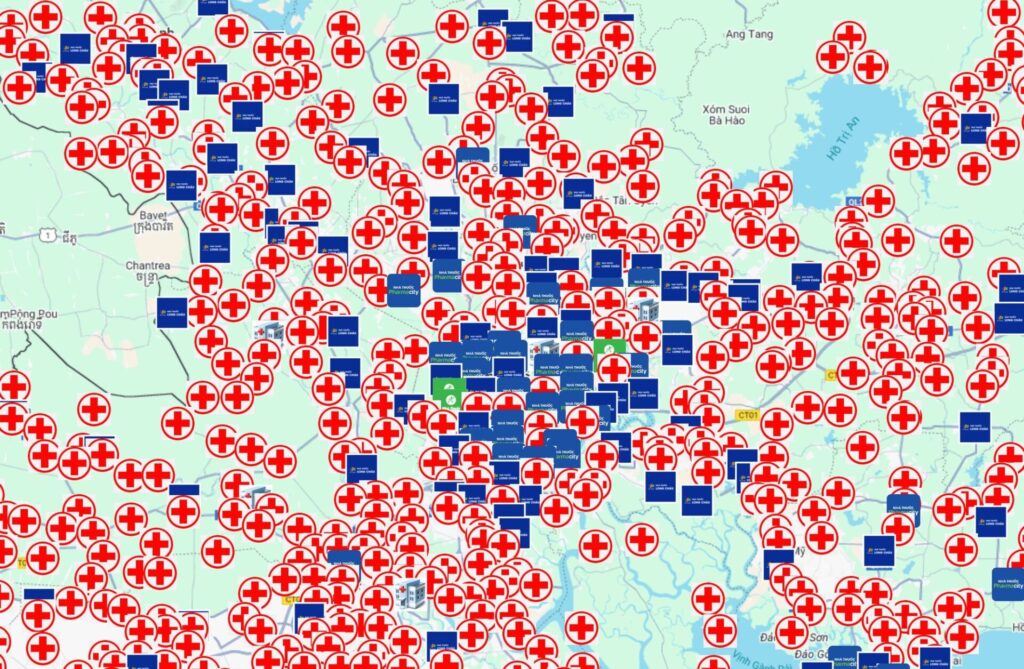
This morning, while sipping coffee and scrolling through my phone, my eyes accidentally landed on a report on the Vietnamese pharmaceutical market for 2024-2025. When I read that Long Chau had surpassed 2,376 stores nationwide (I checked two weeks ago), I almost choked on my coffee. Turning to my friend sitting next to me, I blurted out, "Wow, do you need to take medicine everywhere you go in our country these days? Pharmacies are popping up like coffee shops!"“
He laughed and said, "Since you're doing the site planning, why don't you take out your toy map and take a look?" So I pulled out the map and examined it. And honestly... it was even more surprising than the 2,376 stores I'd seen earlier.
On the map, the database of pharmacies covers the entire area, from the city center down to the districts and towns. It feels like opening Google Maps to find a Saigon coffee shop; wherever you zoom in, you see the logo. Meanwhile, according to our map statistics, the whole country currently has approximately 19,998 public and private medical facilities, including hospitals, health centers, commune health stations, and clinics.
But interestingly, the major pharmacy chains don't surround the hospital as I had imagined. Around the hospital, most of the medication needs are met by the prescription pharmacy on the hospital grounds and the traditional pharmacy system that has been established for decades near the hospital entrance. This is an extremely competitive area with low profit margins; breaking into it is not easy at all.
Instead of rushing into that red zone, the chains chose a different path. They targeted residential areas, major roads, and new urban areas, where people buy cold and flu medicine, headache medication, vitamins, milk for the elderly, pharmaceutical cosmetics, bandages, etc., as a daily routine. To put it humorously, pharmacies are now following the "CVS model of the healthcare industry.".
Looking at the broader market picture, it becomes clear why the race for pharmacy chains is so intense. According to IQVIA and BMI Research, the Vietnamese pharmaceutical market is estimated to reach approximately US$7.5–8 billion in 2024 and is projected to reach US$10 billion by 2026, with an annual growth rate of around 111 TP3T. While the hospital channel still accounts for the majority of revenue, the retail channel is growing rapidly thanks to the boom in modern pharmacy chains.
The country currently has approximately 60,000 pharmacies (according to the Drug Administration Department - Ministry of Health), but the number of modern chain stores is only around 3,000–3,500, which accounts for only 5–61% of the market. This means the market is still very large, especially in provinces, districts, and towns – where people's incomes are increasing and the demand for healthcare is growing.
In this market, LC is currently the sole player. According to FPT Retail's report, LC has surpassed 2,300 stores and is one of the few chains with significant profits, continuing to expand rapidly. Pharmacity, on the other hand, is downsizing to around 900+ stores to focus on optimizing the efficiency of each sales point. An Khang, owned by The Gioi Dien Dong, is also undergoing a major restructuring, reducing its number of stores to around 300+ from over 500 previously. Several new chains are also entering the market, especially in the Mekong Delta and Southern Vietnam.
Another major boost comes from the amended Pharmacy Law, effective from July 1, 2025. The new law allows the sale of over-the-counter medications via e-commerce, provided there is a physical pharmacy, and officially recognizes the pharmacy chain model as a distinct business type. In short, from 2025 onwards, pharmacies will not only sell at the counter but also through apps, websites, and home delivery – truly an omnichannel approach for the pharmaceutical industry. Looking at the map and the data, I realize that the pharmacy chain game in Vietnam isn't really about "whoever opens more wins," but rather about who understands the market better and chooses the right benchmark.
The first lesson is: don't be fooled by the crowded hospital and think opening a pharmacy nearby is a sure thing. This area already has prescription pharmacies within the hospital and a whole ecosystem of traditional pharmacies that have been established for decades. The chain wasn't foolish enough to jump headfirst into that outdated battleground. They chose to go to residential areas, where the need to buy medicine, vitamins, milk, and pharmaceutical cosmetics occurs daily as a routine.
The second lesson is that the pharmacy model is no longer just a drugstore, but a convenient health retail model. Over-the-counter medications are only a part of the business; the majority of profit margins lie in dietary supplements, vitamins, cosmeceuticals, and personal care products. Anyone who builds a store model that aligns with consumer behavior will naturally attract customers, just like going to a mini-supermarket.
The third lesson is that the chain store race is essentially a race for systems. From choosing locations, store design, operations, technology, to online and offline sales. Opening quickly without a standard model will only make things more difficult. Opening slowly but surely, with each store profitable, is the foundation for long-term success.
And the final lesson: the market is still very large. There are 60,000 pharmacies, but the chain only accounts for about 5-61% of them. This means the game has only just begun, and it's no surprise that the big players are gradually taking a bite out of the pie.
This reminds me of something my former boss said 10 years ago: "In about 10 years, convenience stores will replace grocery stores," and now it's happening. I think the pharmacy market will be the same.
Minh Phan – Site Plus | Choosing the right location.
1. The properties that "look decent" are the ones that will cost you money, not the really bad ones.
2. Don't go to view properties without having a deposit ready – if you find a suitable property but can't reserve it, you'll lose the opportunity.
3. Before renting, ask one question: Will opening here help me save on marketing costs?
4. If your capital isn't strong, don't aim for a grand storefront – high rent will put you under daily pressure.
5. The high rental prices aren't natural; they're disguised by claims of "prime location," "bustling area," and "imminent price increases.".
6. Don't be shy about bargaining – being too embarrassed to ask the price is actually the most polite thing to do.
7. Renting space "for the long term" but not measuring traffic volume = risk in disguise.
8. The real estate agent's statement, "Many people are asking about this property," is only valid when you meet potential buyers in person.
9. Choosing the right location won't make you rich every day, but it can cause you consistent losses if you choose incorrectly.
10. Paying for a good location is reasonable; paying based on hearsay is costly.
11. If a property leaves you feeling pressured after paying a deposit, chances are you've made the wrong choice.
12. Not all cheap properties are good deals; some cheaper properties end up costing more to renovate.
13. Renting a large space with little capital is exhausting, but renting a space that's within your means will allow you to thrive.
14. The thing that causes you to choose the wrong location most often isn't the data, but fleeting emotion.
15. When making a deposit, clearly state the refund conditions – even if you know the person, it should still be clear.
16. Before signing the contract, set a monthly rent limit in advance; don't decide it at the negotiating table.
17. When renting expensive premises, keep all communication with the landlord – you'll have something to refer to later.
18. When you receive the existing site plan, remeasure the area immediately on the spot. Don't wait until you get home to discover the discrepancy in the area.
19. Before transferring the deposit, double-check the landlord's name; a mistake means you're looking for… a different landlord.
20. When renting long-term, remember to ask about the price increase schedule; don't be surprised by the price hikes next year.
21. When conducting group surveys, compile the data on the same day; if you wait too long, you'll forget the real feeling.
22. Don't combine the profits from the first store with the money for opening the second store; it's easy to make the wrong decision.
23. When comparing properties, remember to factor in renovation costs – many properties are inexpensive to rent but expensive to renovate.
24. When working with a broker, clearly state your role and fees to avoid having to "start over" later.
25. When sending property information to the team, separate the details: location – price – area – legal status, so everyone can review it quickly.
26. When viewing a property, take complete photos of the storefront, surroundings, and opposite side – you can only analyze it when you get home.
27. Go eat near the area where you plan to open your store, observe where customers go, and don't just rely on maps.
28. For properties that "only need minor repairs," gather the total cost at the end of the day to determine the actual amount needed.
29. When making a deposit via bank transfer, double-check the amount and the transaction details immediately.
30. And remember to choose your landing spot like catching a train; if you miss this one, you can take another. Try not to get on the wrong train and end up missing it.
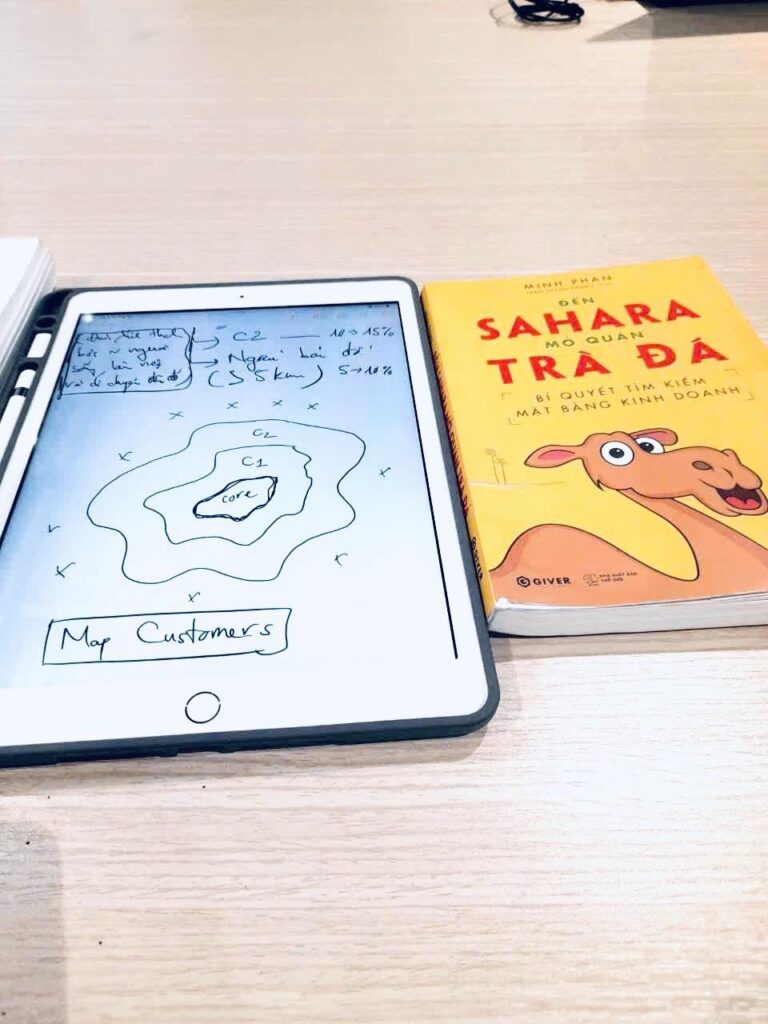
Last weekend, right after finishing my KHS0 class, I received a message from a friend saying that another training provider was using the 4T formula without citing the source. I wasn't upset, but rather happy. Happy because what I had learned from real-world mistakes, from those times I made wrong choices and paid the price with real money, was actually helping more people open businesses with less risk. And I felt even more strongly that my decision a few years ago to sit down and systematize the process of searching for and evaluating locations into a clear framework was the right one, even though at the time I simply wanted to prevent others from making the same mistakes I did.
But I've always thought one thing very clearly: 4T was never created to choose locations for anyone else; it only helps me avoid making the wrong choice.
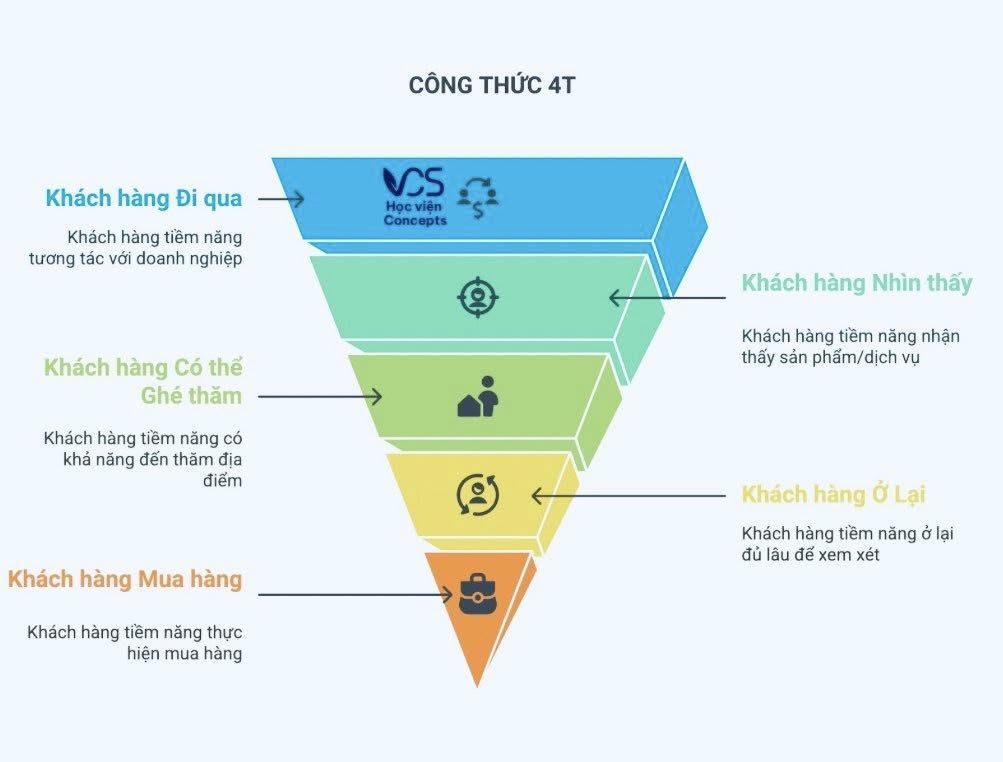
Many people opening a shop for the first time worry: "I'm afraid that sticking too closely to a framework will make it rigid and lose its feel." That worry is very real. But after working on many projects, I realized that a framework doesn't lose the feel; it helps you understand what that feel is based on. In fact, the 4T framework is just a way of looking at the customer journey in real life, just like a funnel from the street gradually into the store. It runs in a continuous stream:
1. Focus – Does this area have enough potential customers? How many people pass by, how many live nearby, and how many actively seek out the product? If the funnel has few customers from the start, even the best work done further down will be very difficult to salvage.
2. Visibility – among those customers, do they see the store? Is the storefront clear? Is the sign obscured? Does the traffic flow long enough for them to notice it? Many places are crowded, but customers… don't see the store at all.
3. Accessibility – how many people can visit? Is it easy to park, is there parking available, and are there any barriers or obstacles blocking the entrance? Many properties look great but fail because customers see them but can't get in.
4. The nature of the space – is it conducive to sales? Is the layout smooth? Do customers stay long enough to make a purchase? What is the actual conversion rate? This is the bottom of the sales funnel.
Looking at it this way, you'll see that the 4T model isn't some profound theory; it simply simulates the customer journey: customer arrives → customer sees → customer enters → customer buys.
Previously, without a clear framework, many decisions were simply summed up in one sentence: "I think this apartment looks good," but that "thinking" often contained a mix of things: a bit of data, a bit of hope, the agent's word, and the pressure of fearing missing out on a desirable property. 4T helps to separate those layers for a clearer view, and interestingly, many people, after analyzing the situation, say to themselves, "I'll pass on this apartment," not because anyone forced them, but because they had already foreseen risks that had been obscured.
I've always thought that opening a store doesn't require being exceptionally skilled from the start; you just need to be level-headed enough to avoid costly mistakes. A framework doesn't guarantee success, but it helps reduce recklessness. And for me, that's already incredibly valuable.
 . I drove to a small cafe in the countryside and ordered a latte. I asked for the bill. The young man spoke too softly, I couldn't hear clearly, so I took out my wallet and gave him 20,000 dong, thinking it was a reasonable price for a latte. When I got to the car, he ran after me, gave me back 5,000 dong, and said, "Just 15,000 dong, brother." I laughed and casually asked, "Are you making a profit selling a latte for 15,000 dong?".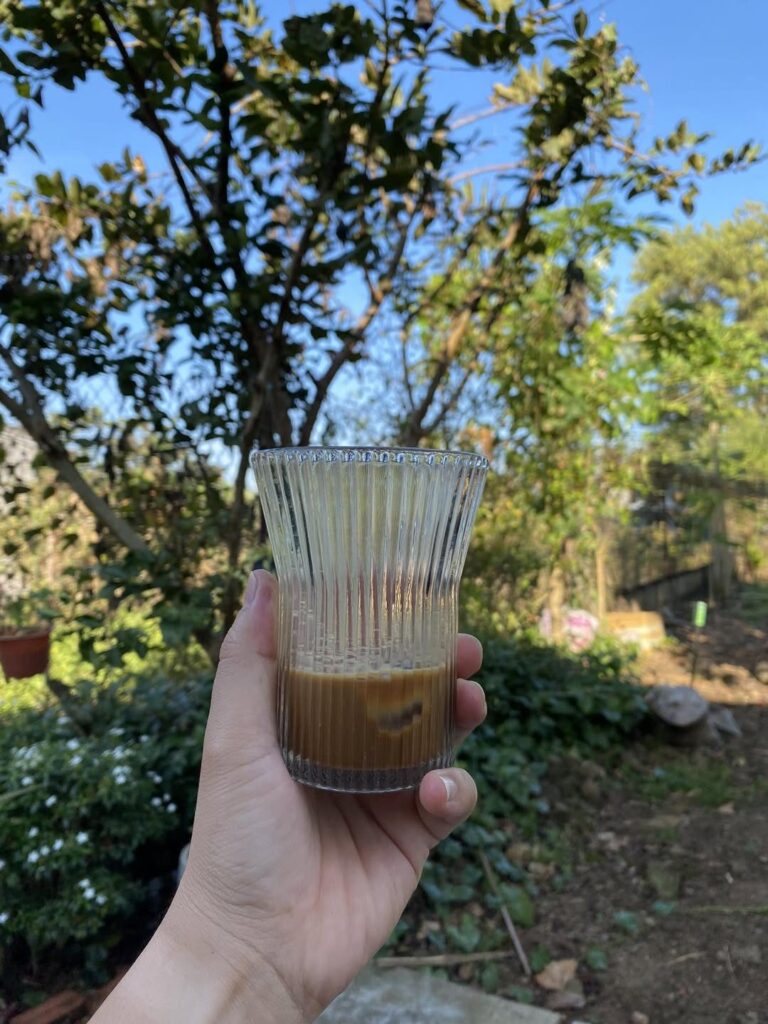
 ”.
”.