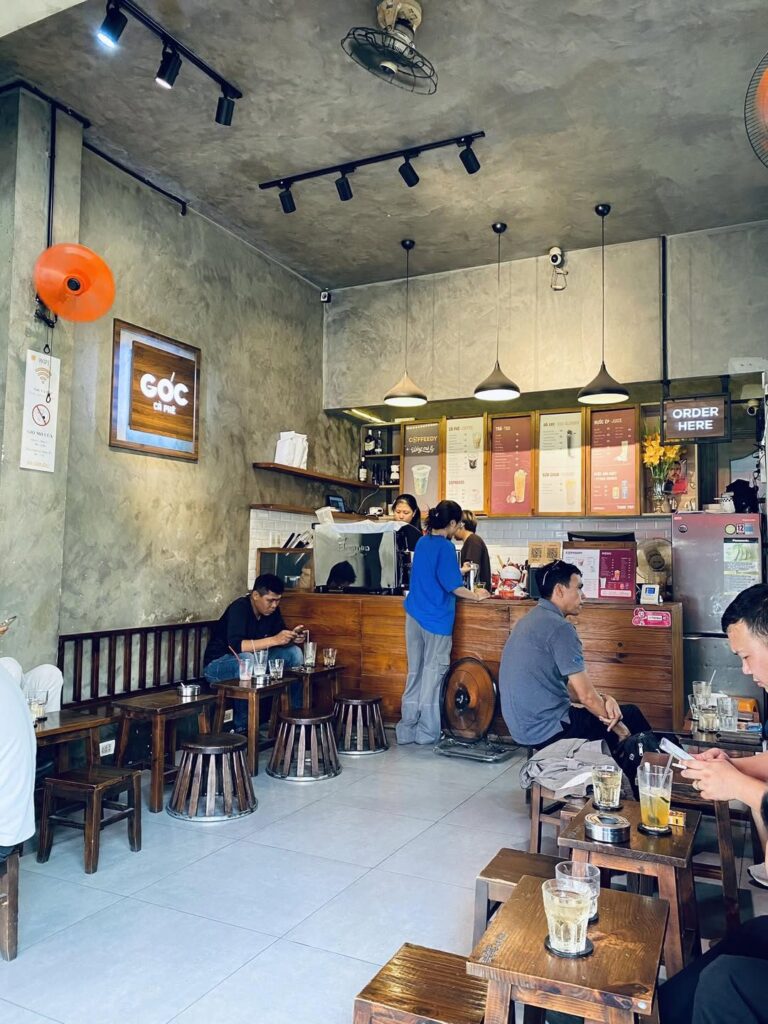
After breakfast, I ask my wife for money to buy coffee. Those of us starting businesses are probably used to this; we don't have our own money, we always have to ask our wives for it.  . I drove to a small cafe in the countryside and ordered a latte. I asked for the bill. The young man spoke too softly, I couldn't hear clearly, so I took out my wallet and gave him 20,000 dong, thinking it was a reasonable price for a latte. When I got to the car, he ran after me, gave me back 5,000 dong, and said, "Just 15,000 dong, brother." I laughed and casually asked, "Are you making a profit selling a latte for 15,000 dong?".
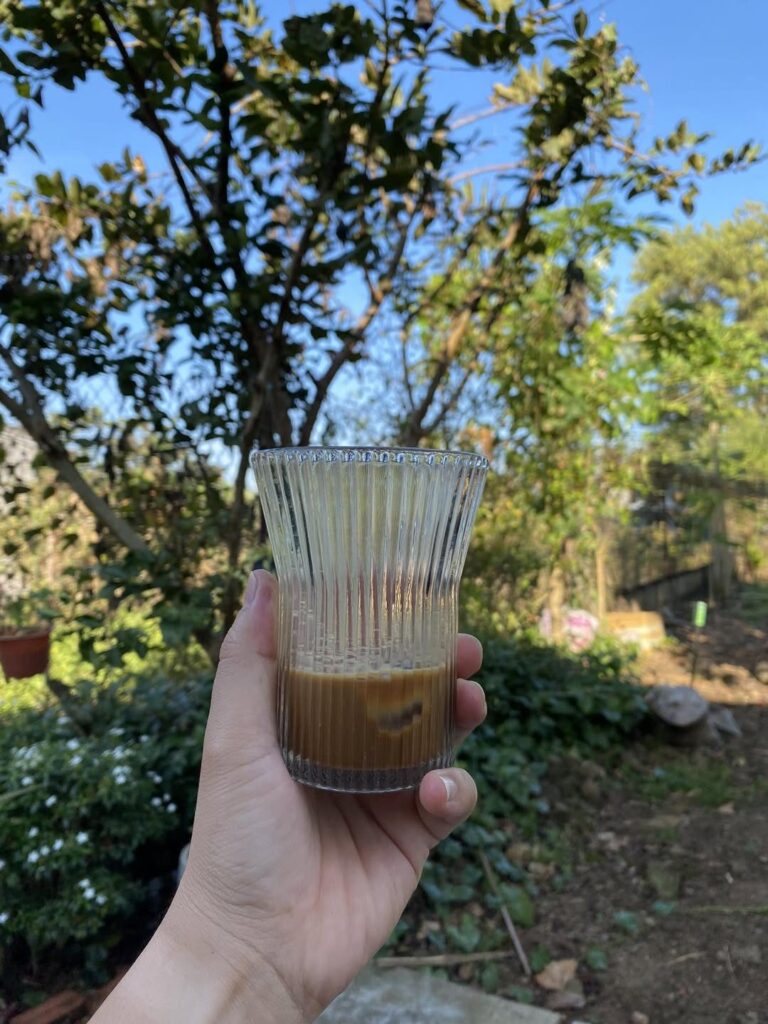
He replied very naturally and honestly: "Of course, sir, it's the ground floor of my house."  ”.
”.
The saying sounded funny, but as soon as I started the car and drove away, I felt a pang of bitterness. "The premises"—those three words are one of the most common traps for those opening a business, especially first-timers. Yes, the premises are an advantage. But precisely because it's an advantage, it can easily become a weakness. It makes people complacent. Complacent because they don't have to pay rent, so they think opening a business will be profitable. Complacent because they don't calculate all the costs. And most dangerously, they don't factor in their own labor and salary.
Let's do a practical calculation. If the space wasn't her own but rented, let's say it only cost 5 million VND/month. If she didn't sell herself but hired someone, the minimum salary would still be 8 million VND/month. Thus, there are two very clear expenses that are completely omitted from the calculation: rent and salary. That's a total of 13 million VND/month. So when we talk about "profit," where does the profit really come from? The profit comes from not having to pay rent and not having to pay her own salary. If sales are weaker in a given month, not enough to cover that 13 million VND, then essentially it's a loss, only this loss is masked by the phrase "renting her own space.".
I used to sell coffee, so I have a basic understanding of the costs. The coffee I had this morning was decent; with that quality, I estimate the coffee costs around 250,000 VND per kilogram. Using a machine, after accounting for losses and raw materials, one kilogram makes about 40 cups. A quick calculation shows that the cost of coffee, milk, cups, lids, straws, ice, packaging… each cup costs nearly 10,000 VND. Selling at 15,000 VND, the costs already exceed 661,000 VND. This is a very alarming figure in the F&B industry. This doesn't even include electricity and water, equipment wear and tear, or slow sales days. Therefore, the idea of "the more you sell, the more you lose" is entirely possible, not just a figure of speech.
If the story had ended with just a small coffee shop in front of a house, there wouldn't be much to say. But what makes me think is that many people are used to this way of calculating costs and then take it to opening more locations, even franchising. They're used to not calculating rent, used to not calculating salaries, used to profiting from "hard work." When they open a physical store, rent a place, pay real salaries, the model starts to fall apart. At that point, people often blame unsuitable locations, a difficult market, or bad timing. Few people look back at the root cause: the model from the beginning relied on temporary advantages, not on a sustainable structure.
On the way home, I suddenly remembered something an older brother once said to me a long time ago: "Coffee isn't just bitter." Yes, coffee isn't just bitter; it's spicy too. The spiciest part is when many people approach coffee with a love for it, with passion, opening cafes impulsively, without careful planning or deep consideration. Then, when it's time to close, they just sigh: "The coffee was too bitter." Actually, it's not the coffee that's bitter, but the decision to open the cafe that was too sweet.
I've been through that myself, so I understand that feeling very well. Understanding it helps me realize that an advantage, if not properly understood, can become a very subtle trap. So subtle that people don't realize they're losing out until they can't bear it anymore.
Did you find this article helpful?
Sign up to receive new articles every week on store layout and retail development.