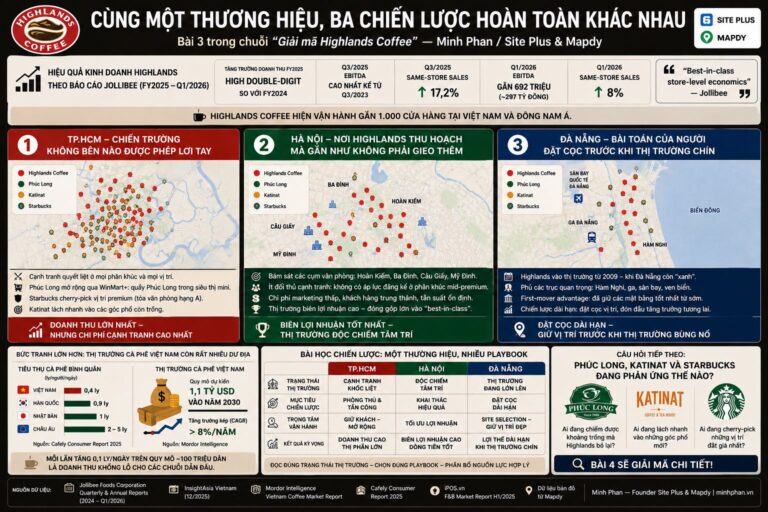
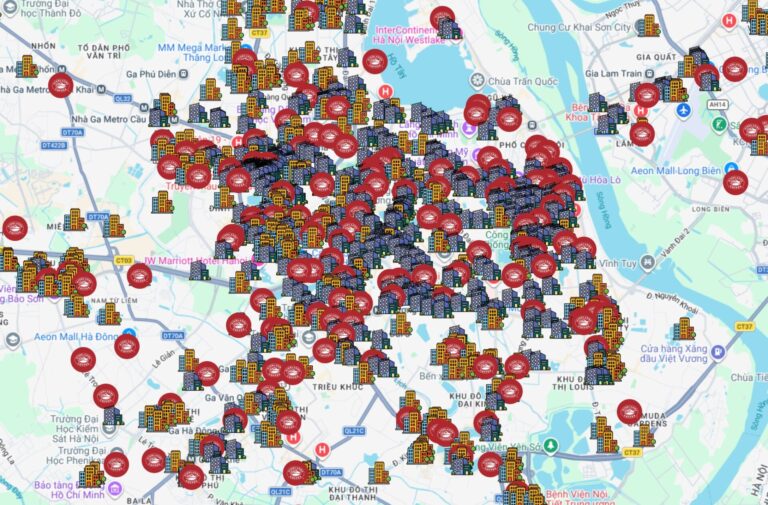
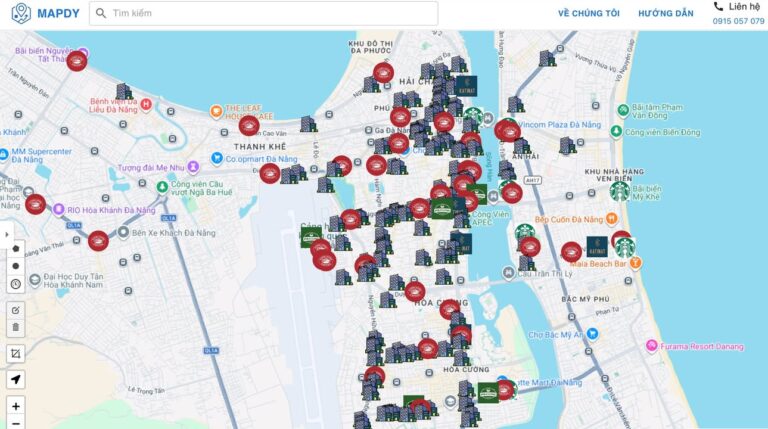
A few days ago, I went to view a location in the Bac Hai area to open another branch for an art center I'm advising. The location was nice, the structure was good, and the rent was reasonable. Honestly, if I followed my "market intuition," I could almost close the deal, with only a few minor clauses left to sign. But right then, the Founder asked me a very short question: "Will this affect sales at the Tan Binh store?" I paused, because conventional thinking is that these two areas are separated by the Nhieu Loc canal, so we often assume it won't have much impact. But my experience running a chain of stores has taught me one thing: geographical intuition is often wrong; customer movement is what ultimately matters.
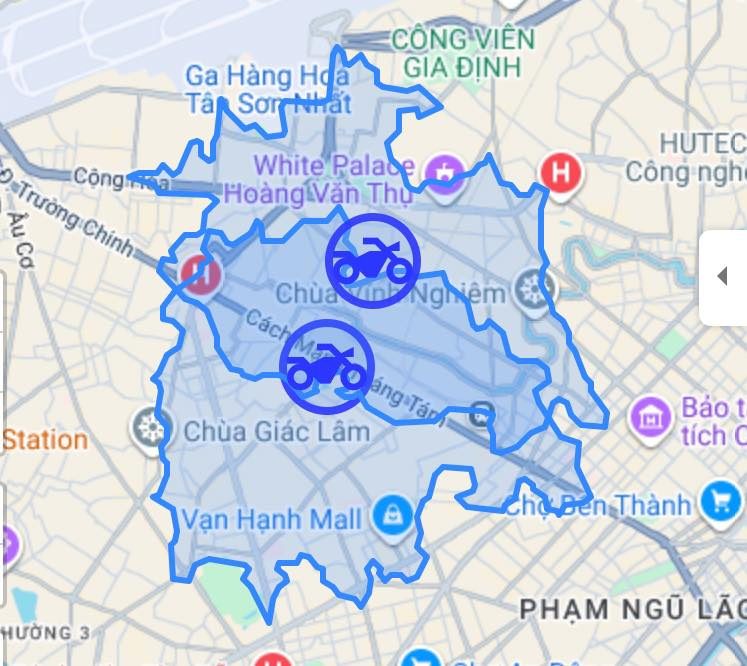
I opened Mapdy, plotted the motorcycle travel zones within a 5-10 minute radius as shown in the image, and the results were clear: these two zones overlap strongly, meaning the same customer base can visit both stores within the same timeframe. Simply put, this isn't about opening more locations to attract more customers, but rather about redistributing existing customers. In retail, this is called cannibalization, and according to industry data, if two stores are within a 10-minute travel radius, the "sales cannibalization" rate can reach 20-70% depending on the industry and consumer behavior.
Let me give you a very practical example to help you visualize: store A is making 600 million VND/month, then opens store B. After that, A has 400 million VND left, and B makes 200 million VND. At first glance, it seems like there's an additional 200 million VND in revenue, but in reality, the total remains 600 million VND, not an increase. Meanwhile, rent, staffing, and operating costs all increase, meaning profit decreases. This is a trap that many store owners fall into but don't realize, because they think opening the new store is the right decision since it's still generating revenue, without looking at the overall system.
The biggest mistake here is that many people only look at the attractive location, good price, and high foot traffic without answering the most important question: are these customers new or existing customers? Without data on traffic patterns and a view of catchment areas like in the image, it's almost impossible to answer accurately. In reality, many "barriers" like canals, main roads, or perceived distances become less significant when motorbike travel within the city is so flexible.
Ultimately, the team decided against renting the space in Bac Hai, not because it wasn't good, but because opening a new store wouldn't create additional value. The insight was simple, yet many overlooked it: opening more stores isn't about having more stores, but about having more customers. Without more customers, you're just repackaging the old pie. And sometimes, the decision not to open… is the decision that will help you make the most money.
Minh Phan – Choosing the right location
Did you find this article helpful?
Sign up to receive new articles every week on store layout and retail development.