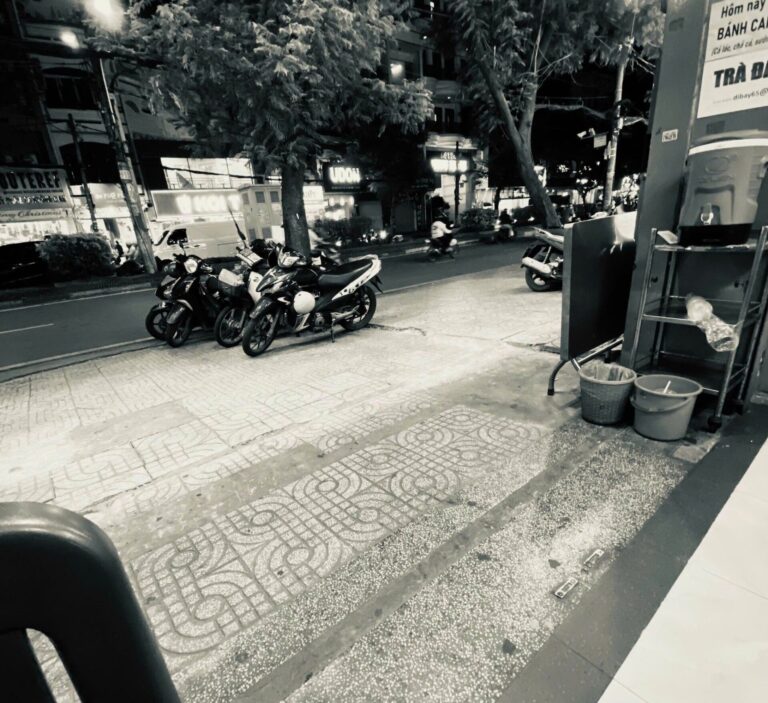
While working, my older brother sent me a video analyzing the situation of businesses returning premises on Ho Van Hue Street. After listening to it, it seemed reasonable. Actually, the story of shops withdrawing from this street has been going on for 3-4 years now, not just recently. But every time a few streets become vacant, there's a wave of conclusions that the market is tough and businesses are returning en masse. While that sounds reasonable, it doesn't accurately reflect the current situation.

Looking back over a decade, when online shopping wasn't as developed and customers still searched for physical stores, the "specialized street" model worked very well. Fashion was concentrated on Nguyen Trai and Le Van Sy streets; F&B on Phan Xich Long; wedding dresses on Ho Van Hue street… But now, behavior has changed. Customers search on their phones first before deciding where to go. Streets like Ho Van Hue face another major problem: inconvenient access, difficulty parking, and not being on the main traffic flow. Therefore, the withdrawal of brands was predictable. Bringing up this issue again to say the market is struggling is inappropriate in the current context.
However, looking at the current reality, the story is completely the opposite. Finding a good location is not easy these days; in fact, it's scarce. Even I and my colleagues in the business are struggling to find a place to open a store. Having money doesn't guarantee a spot. There are clear examples: yesterday the landlord was asking 70 million VND, the next day they've raised it to 80 million VND, and people are still inquiring about renting. This is no longer an isolated incident but a sign of a price increase cycle returning.
Why is that? Actually, there are three forces pushing the market up simultaneously.
Firstly, there's a wave of brands that previously sold online returning to offline. After a period of dependence on e-commerce platforms, with increasingly high costs, many realized that platform fees and advertising could account for 20-30% of their revenue, so they started opening physical stores to optimize their profits.
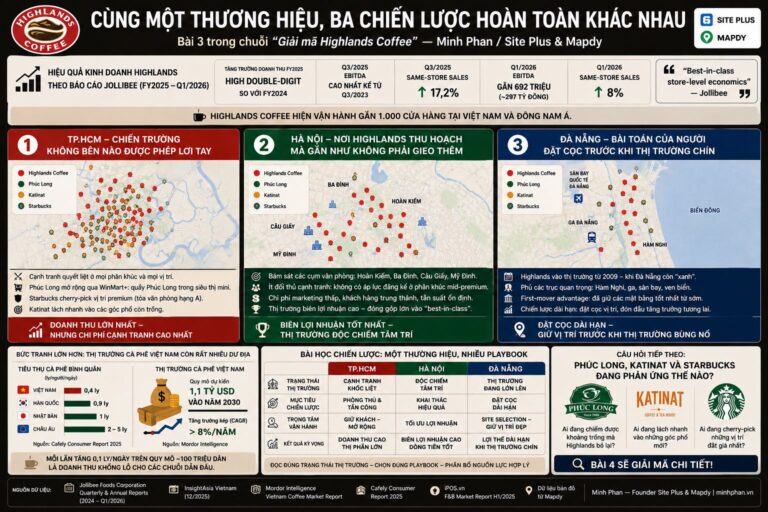
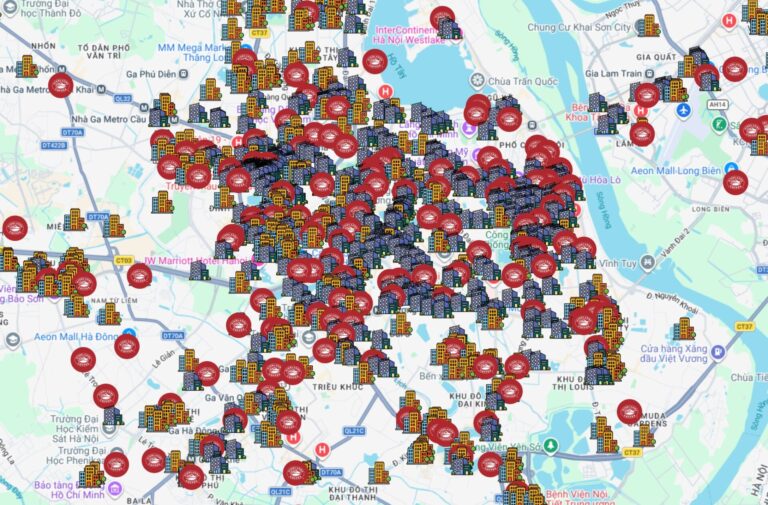
Secondly, large chains continue to expand very aggressively. The convenience store and mini-mart sector alone in Vietnam has nearly 10,000 locations, with WinMart+ having over 4,500 stores, not to mention F&B chains like Highlands, Phuc Long, Katinat… which open dozens to hundreds of new locations each year. Wherever these brands expand, the price of retail space in that area is driven up.
Thirdly, there's a wave of international brands returning to Vietnam after the pandemic. They're not going individually but in groups, following long-term strategies and willing to pay high prices to secure their positions. For example, a Chinese bubble tea chain recently entered the market with positions costing hundreds of millions of VND per month. And while the press recently reported that the king of burgers closed all his stores, another major player is now reportedly entering Vietnam.
The most dangerous aspect is that the game has changed, something many people haven't realized. In the past, if you opened an art school, you only competed with other art schools; if you opened a gym, you competed with other gyms. Now, you're competing for space with large F&B chains, high-net-worth online brands, and even international brands. The game is no longer about competing within the same industry, but about who can afford the higher costs and for the longer term. And in this game, the biggest beneficiary isn't the business owner, but the landlord.
There's a very real thing about the Vietnamese market: land prices may stagnate for a while, but they almost never fall. When the market slows down, you see many vacant spaces, but when money flows back in, prices rebound very quickly. So, if you look at the true nature of things, the market isn't dying, but rather undergoing a phase transition, and the frenzy of rising land prices is about to return.
For those preparing to open a business right now, the crucial question is no longer "how much will the rent cost," but whether their business model can handle these costs. Most mistakes don't lie in the search for a location, but in realizing after signing the contract that they're entering a much bigger game than they initially imagined.
Minh Phan – Choosing the right location
Did you find this article helpful?
Sign up to receive new articles every week on store layout and retail development.